
Fire Alarm Systems

- Access Control Installation - March 2, 2026
- Fire Alarm Systems - February 27, 2026
- Alarm Alerts and Notification System - February 27, 2026
Introduction
Fire doesn’t knock before entering. It spreads silently, aggressively, and often invisibly before anyone realizes what’s happening. That’s exactly why fire alarm systems are not just devices installed on ceilings—they’re lifelines. They are the silent guardians standing watch 24/7, ready to react the moment smoke or heat crosses a dangerous threshold.
Think about it. A fire can double in size every 30 to 60 seconds. In those critical early moments, detection is everything. The difference between minor damage and total devastation often comes down to how quickly occupants are alerted. A properly installed fire alarm system can mean the difference between life and tragedy.
In today’s world, fire alarm systems are more advanced than ever. From simple smoke detectors in homes to intelligent addressable systems in high-rise buildings, the technology has evolved significantly. Modern systems don’t just ring bells—they communicate with monitoring centers, integrate with smart building systems, and even pinpoint the exact location of a fire.
Whether you’re a homeowner looking to protect your family or a business owner ensuring compliance and safety, understanding fire alarm systems is essential. This guide walks you through everything—types, components, installation, costs, maintenance, regulations, and how to choose the right system.
Let’s break it down step by step and uncover what truly keeps buildings—and people—safe.
Understanding Fire Alarm Systems
A fire alarm system isn’t just a smoke detector that makes noise. It’s a carefully designed network of devices working together to detect fire at its earliest stage and alert occupants immediately. It acts as the building’s nervous system, sensing danger and triggering a response.
At its core, a fire alarm system performs three primary functions:
-
Detection – Identifying smoke, heat, or flame.
-
Notification – Alerting occupants through alarms, strobes, or voice messages.
-
Response Activation – Triggering safety protocols like sprinkler systems or emergency communication.
Imagine a chain reaction. A sensor detects smoke. That signal travels to the fire alarm control panel. The panel processes the information and activates alarms throughout the building. In advanced systems, it can also notify emergency services automatically.
The beauty of modern fire alarm systems lies in their reliability and speed. They operate continuously, scanning for environmental changes. Unlike humans, they don’t get distracted, tired, or complacent.
But here’s the thing—no two buildings are the same. A small home doesn’t need the same complexity as a hospital or shopping mall. That’s why understanding system types and components is crucial before making any decisions.
Fire alarm systems are not optional safety add-ons. In many regions, they are legally required in commercial and multi-family residential buildings. Compliance isn’t just about avoiding fines—it’s about protecting lives.
And honestly, isn’t peace of mind worth the investment?
What Is a Fire Alarm System?
A fire alarm system is an integrated set of devices designed to detect and warn people about the presence of fire, smoke, carbon monoxide, or other fire-related emergencies. Its primary purpose is simple: provide early warning so people can evacuate safely.
But under the surface, it’s much more sophisticated.
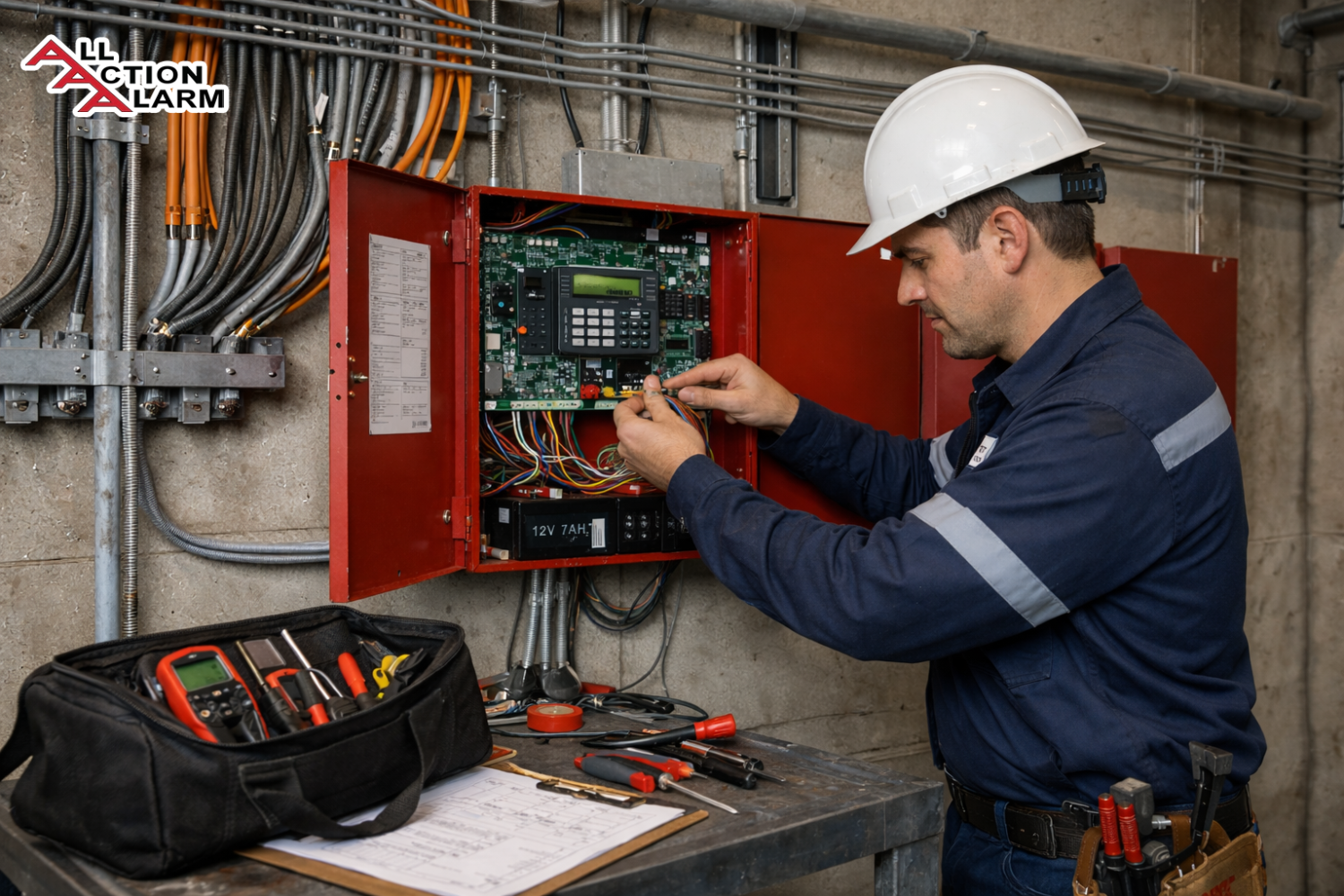
At the heart of every system lies the Fire Alarm Control Panel (FACP). This panel acts like the brain. It receives signals from detection devices and decides how to respond. If smoke is detected in a specific area, the panel processes that information and activates appropriate alerts.
A complete fire alarm system typically includes:
-
Smoke detectors
-
Heat detectors
-
Manual pull stations
-
Alarm sounders and strobes
-
Control panels
-
Backup power supplies
In advanced systems, you might also find:
-
Voice evacuation systems
-
Integration with HVAC systems
-
Automatic sprinkler control
-
Remote monitoring capabilities
The purpose goes beyond simply making noise. Modern systems can identify the exact location of a triggered device, allowing emergency responders to act quickly and efficiently.
Think of it like a highly organized emergency team. Each device has a specific role, but they all communicate seamlessly.
Without a fire alarm system, a building is essentially blind to fire until it’s too late. With one, it gains early awareness—often within seconds of ignition.
And in a fire emergency, seconds matter more than anything else.
How Fire Alarm Systems Work
Let’s simplify this. A fire alarm system works like a three-step security process: detect, process, and notify.
Step 1: Detection
Sensors continuously monitor environmental conditions. Smoke detectors sense airborne particles. Heat detectors monitor temperature spikes. Some advanced detectors even analyze gas levels or flame signatures.
The moment a detector senses something unusual, it sends a signal to the control panel.
Step 2: Processing
The Fire Alarm Control Panel evaluates the signal. Is it smoke? Is it excessive heat? Is it a manual trigger? The panel confirms whether the situation meets alarm criteria.
In intelligent systems, the panel can distinguish between minor disturbances and genuine threats, reducing false alarms.
Step 3: Notification
Once confirmed, the system activates:
-
Audible alarms (horns, sirens)
-
Visual alerts (flashing strobes)
-
Voice instructions
-
Emergency communication to monitoring services
Some systems also trigger:
-
Automatic door releases
-
Elevator recall
-
HVAC shutdown
-
Sprinkler systems
It’s a coordinated response designed to minimize confusion and maximize safety.
Modern addressable systems take it further. They can pinpoint the exact room or device that triggered the alarm. Imagine knowing that “Smoke detected in Room 204” instead of searching an entire building.
That precision saves lives and reduces damage.
Fire alarm systems don’t just react—they orchestrate a building-wide safety response within seconds.
And when you think about it, that’s incredibly powerful.
Not all fire alarm systems are built the same. Choosing the right one is a bit like choosing a vehicle—you wouldn’t use a bicycle to transport heavy cargo, and you wouldn’t buy a semi-truck just to grab groceries. The right system depends on the building, occupancy, budget, and safety requirements.
Let’s explore the major types of fire alarm systems and where each one fits best.
Conventional Fire Alarm Systems
Conventional fire alarm systems are the traditional, straightforward option. They divide a building into zones, and each zone is wired to the control panel. If a detector in a particular zone triggers, the panel indicates which zone is in alarm—but not the exact device.
Think of it like knowing there’s smoke somewhere in the kitchen, but not knowing whether it’s the oven or the toaster.
These systems are commonly used in:
-
Small office buildings
-
Retail stores
-
Schools
-
Small warehouses
-
Residential buildings
How They Work
Each zone has multiple devices wired together on a single circuit. When one device detects smoke or heat, the entire zone signals the control panel. The panel displays something like “Zone 3 Alarm.”
This setup is simple and cost-effective, which makes it attractive for smaller properties.
Advantages
-
Lower installation cost
-
Simple design
-
Easy to operate
-
Reliable for small spaces
Limitations
-
Cannot pinpoint exact device location
-
More wiring required
-
Less scalable for large buildings
If you’re protecting a small property with limited complexity, a conventional fire alarm system can do the job effectively. But once buildings become larger or more intricate, things start to get complicated—and that’s where addressable systems shine.
Addressable Fire Alarm Systems
Addressable fire alarm systems are the modern, intelligent upgrade. Instead of dividing devices into zones, each device has its own unique address—like a digital fingerprint.
Imagine receiving a message that says, “Smoke detected in Conference Room 2, East Wing.” That’s the precision you get with an addressable system.
These systems are ideal for:
-
Hospitals
-
High-rise buildings
-
Hotels
-
Universities
-
Large commercial properties
How They Work
Every detector, pull station, or module communicates individually with the control panel. When activated, the system identifies the exact device and location.
This precision dramatically improves response times.
Advantages
-
Exact location identification
-
Easier troubleshooting
-
Fewer false alarms
-
Scalable for large buildings
-
More flexible wiring
Why Businesses Prefer Them
In large facilities, knowing exactly where the problem is can save precious minutes. Firefighters don’t have to search entire floors—they go straight to the source.
Yes, the initial investment is higher than conventional systems. But the improved safety, faster response, and easier maintenance often justify the cost.
If conventional systems are basic maps, addressable systems are GPS navigation.
Wireless Fire Alarm Systems
Now let’s talk about flexibility.
Wireless fire alarm systems operate using radio frequency signals instead of traditional wiring. They’re becoming increasingly popular, especially in buildings where running wires is difficult or disruptive.
Think historic buildings, temporary structures, or renovations.
How They Work
Devices communicate wirelessly with the control panel. Each device runs on batteries and transmits signals securely through encrypted channels.
Where They Excel
-
Heritage properties
-
Hospitals during renovation
-
Offices with minimal downtime allowance
-
Temporary installations
Benefits
-
Faster installation
-
Minimal structural damage
-
Lower labor costs
-
Easy expansion
Challenges
-
Battery maintenance required
-
Higher device cost
-
Signal interference risks (rare but possible)
Wireless systems offer incredible convenience. They reduce installation time significantly and eliminate extensive cabling. However, they require consistent battery checks to ensure reliability.
It’s like switching from landlines to mobile phones—less wiring, more freedom.
Hybrid Fire Alarm Systems
Can’t decide between wired and wireless? You don’t have to.
Hybrid fire alarm systems combine both technologies. They allow wired components in permanent areas and wireless devices where wiring is impractical.
This is especially useful in:
-
Expanding facilities
-
Multi-building campuses
-
Complex renovations
Hybrid systems provide flexibility without sacrificing reliability. You get the stability of wired infrastructure where needed and the adaptability of wireless in tricky spots.
It’s the best of both worlds—like having both Wi-Fi and Ethernet in your office.
For growing businesses or evolving properties, hybrid systems offer long-term scalability and adaptability.
Core Components of a Fire Alarm System
No matter which type you choose, every fire alarm system relies on several critical components. These devices work together seamlessly, forming a protective network.
Let’s break down the most important pieces.
Fire Alarm Control Panel (FACP)
The Fire Alarm Control Panel is the command center—the brain of the entire system.
Every signal from every detector flows through this panel. It monitors, processes, and decides what action to take. Without it, the system would be a collection of disconnected devices.
Key Functions
-
Monitors all connected devices
-
Processes alarm signals
-
Activates notification appliances
-
Supervises system integrity
-
Provides system diagnostics
Modern control panels come with digital displays, touchscreen interfaces, and remote monitoring capabilities. Some even integrate with building management systems.
The panel also monitors for faults. If a wire is cut or a battery fails, it alerts maintenance teams immediately.
In advanced systems, the panel can:
-
Control elevators
-
Shut down air handling units
-
Unlock emergency exits
-
Activate suppression systems
It’s more than just a box on the wall—it’s the operational headquarters of building safety.
Smoke Detectors
Smoke detectors are often the first line of defense. They detect smoke particles before flames become visible.
There are two main types:
Ionization Smoke Detectors
-
Detect fast-flaming fires
-
More responsive to smaller smoke particles
Photoelectric Smoke Detectors
-
Better at detecting smoldering fires
-
Less prone to false alarms
Many modern systems combine both technologies for balanced protection.
Placement Matters
Smoke detectors should be installed:
-
On ceilings
-
In hallways
-
Inside sleeping areas
-
In common spaces
Proper placement ensures faster detection and fewer blind spots.
Think of smoke detectors as watchful guards. They’re constantly scanning the air, ready to trigger the alarm at the first sign of danger.
Heat Detectors
Heat detectors activate when temperature rises rapidly or exceeds a fixed threshold. They are ideal in areas where smoke detectors might cause false alarms.
Common locations include:
-
Kitchens
-
Boiler rooms
-
Garages
-
Industrial facilities
There are two main types:
Fixed Temperature Detectors
Trigger when a set temperature is reached.
Rate-of-Rise Detectors
Trigger when temperature increases rapidly within a short time.
Heat detectors don’t replace smoke detectors—they complement them. In dusty or steamy environments, they provide reliable protection without unnecessary alarms.
Manual Call Points
Sometimes, people spot danger before sensors do. Manual call points—also known as pull stations—allow occupants to activate the alarm manually.
They are typically installed:
-
Near exits
-
Along escape routes
-
At building entrances
In an emergency, pulling the station immediately triggers the system.
These devices empower occupants to take action instantly. They act as a backup to automated detection, ensuring no delay in response.
Alarm Notification Devices
Detection is only half the battle. People must be alerted clearly and immediately.
Notification appliances include:
-
Horns
-
Bells
-
Sirens
-
Flashing strobes
-
Voice evacuation systems
In commercial buildings, voice systems provide clear instructions like:
“Attention. Please proceed to the nearest exit.”
This reduces panic and improves evacuation efficiency.
Visual strobes are essential for individuals with hearing impairments, ensuring compliance with accessibility standards.
Notification devices transform detection into action. Without them, early detection would mean little.
Installing a fire alarm system isn’t like mounting a TV on the wall or plugging in a new appliance. It’s a structured, code-driven process that requires careful planning, technical expertise, and strict compliance with safety standards. If the system isn’t designed correctly from the beginning, even the most advanced equipment can fail when it matters most.
Before a single wire is run or a detector is mounted, a detailed site assessment must be completed. This includes evaluating:
-
Building size and layout
-
Number of floors
-
Occupancy type
-
Fire risk areas
-
Existing infrastructure
-
Local fire codes and regulations
Every building has its own personality. A warehouse filled with combustible materials has completely different requirements than a residential apartment complex. You can’t apply a one-size-fits-all approach to life safety.
System Design and Zoning
Designers map out detector placement, notification appliance locations, control panel positioning, and wiring routes. The goal is complete coverage without gaps. Dead zones are unacceptable.
Spacing guidelines are determined by code, but environmental factors also matter. High ceilings, airflow patterns, and obstructions all influence detector effectiveness.
Professional Installation vs. DIY
For residential standalone smoke alarms, DIY installation may be fine. But for integrated fire alarm systems—especially in commercial buildings—professional installation is not optional.
Certified technicians ensure:
-
Proper wiring
-
Correct programming
-
Code compliance
-
Functional testing
-
Documentation for inspection
Improper installation can lead to false alarms, delayed detection, or total system failure. And in a real emergency, that’s a risk no one should take.
A fire alarm system is an investment in safety. Cutting corners during installation is like building a parachute halfway—you don’t want to test it under pressure.
Fire Alarm Codes and Regulations
Fire alarm systems aren’t just safety recommendations—they’re legally regulated. Building codes exist because history has shown us what happens when fire protection is neglected.
Depending on location, regulations may include:
-
NFPA 72 (National Fire Alarm and Signaling Code)
-
International Building Code (IBC)
-
Local municipal fire codes
-
Insurance compliance standards
These codes dictate:
-
Where devices must be installed
-
How often systems must be tested
-
Required documentation
-
Monitoring requirements
-
Accessibility standards
Compliance isn’t optional for commercial properties. Failing to meet code can result in:
-
Heavy fines
-
Business closure
-
Legal liability
-
Insurance claim denial
Inspection and Testing Requirements
Routine inspections ensure systems remain operational. Typical schedules include:
-
Monthly visual inspections
-
Quarterly testing
-
Annual comprehensive inspections
-
Battery checks
-
Device sensitivity testing
Fire marshals or certified inspectors often conduct official reviews.
It may seem excessive—but think about it. A fire alarm system sits quietly most of the time. Without regular testing, how would you know it’s still ready?
Codes exist to remove uncertainty. They ensure that when an alarm sounds, it works exactly as designed.
Maintenance and Troubleshooting
Installing a fire alarm system is only half the journey. Ongoing maintenance keeps it reliable year after year.
Dust accumulates. Batteries degrade. Sensors age. Software requires updates. Ignoring maintenance is like never servicing your car—you might get away with it for a while, but eventually, something fails.
Routine Maintenance Checklist
Here’s what proper maintenance typically includes:
-
Cleaning smoke detectors
-
Testing alarm sounders
-
Checking backup batteries
-
Inspecting wiring connections
-
Reviewing control panel logs
-
Verifying communication with monitoring services
Some systems even provide automated diagnostics, alerting maintenance teams to issues before they become serious.
Common Fire Alarm Problems
Let’s talk about real-world issues.
False Alarms
Often caused by dust, steam, cooking fumes, or improper placement.
Dead Backup Batteries
Power outages reveal neglected batteries quickly.
Sensor Drift
Over time, detectors may become less sensitive and require recalibration.
Wiring Faults
Rodents, construction work, or aging infrastructure can damage wiring.
The key is proactive care. Scheduled inspections reduce emergency repairs and prevent system downtime.
Think of maintenance as preventive medicine. It’s far easier to address small issues than to recover from system failure during a crisis.
Benefits of Modern Fire Alarm Systems
Technology has transformed fire alarm systems from simple sirens into intelligent safety networks.
Integration with Smart Technology
Today’s systems can integrate with:
-
Smart building management systems
-
Mobile monitoring apps
-
Security systems
-
Access control
-
CCTV surveillance
Imagine receiving a real-time alert on your phone that smoke has been detected in your facility. You can verify, contact emergency services, and monitor the situation remotely.
That’s not futuristic—that’s available now.
Some systems even analyze patterns to reduce false alarms. Artificial intelligence is beginning to play a role in predictive safety measures.
Enhanced Safety and Peace of Mind
Beyond technology, the real benefit is psychological. Knowing your building is protected brings peace of mind.
For businesses, benefits include:
-
Reduced liability
-
Lower insurance premiums
-
Faster emergency response
-
Improved employee confidence
For homeowners, it means sleeping better at night.
Fire alarm systems don’t just protect structures—they protect people, memories, and livelihoods.
Cost of Fire Alarm Systems
Cost varies widely depending on system type, building size, and complexity.
Here’s a simplified breakdown:
| System Type | Estimated Cost Range |
|---|---|
| Basic Residential | $200 – $1,000 |
| Conventional Commercial | $2,000 – $10,000+ |
| Addressable Commercial | $10,000 – $100,000+ |
| Wireless Systems | Varies based on scale |
Factors That Affect Cost
-
Number of devices
-
Building size
-
Wiring requirements
-
Monitoring services
-
Compliance requirements
-
Installation labor
While upfront costs can seem significant, consider the long-term return:
-
Reduced fire damage
-
Lower insurance rates
-
Legal compliance
-
Business continuity
When compared to potential losses from a fire, the investment is minimal.
It’s not an expense—it’s risk management.
Choosing the Right Fire Alarm System
So how do you choose?
Start by asking:
-
What type of building am I protecting?
-
How large is the space?
-
What do local codes require?
-
Do I need monitoring services?
-
Is future expansion likely?
Residential vs. Commercial Needs
Residential systems prioritize early warning and simplicity.
Commercial systems focus on:
-
Code compliance
-
Large-scale coordination
-
Voice evacuation
-
Monitoring integration
-
Redundancy
Commercial environments often require professional design and certification.
Questions to Ask Before Buying
-
Is the system scalable?
-
What warranty is offered?
-
Is 24/7 monitoring included?
-
How often is maintenance required?
-
Are parts readily available?
Choosing the right system is about balance—cost, compliance, reliability, and future growth.
Make decisions based on safety, not just price.
Conclusion
Fire alarm systems are more than electronic devices mounted on ceilings. They are silent protectors, constantly monitoring for danger, ready to respond within seconds. From conventional systems in small offices to intelligent addressable networks in skyscrapers, these systems form the backbone of modern fire safety.
Early detection saves lives. Clear notification prevents panic. Integrated response minimizes damage. Compliance ensures reliability.
Whether you’re safeguarding your home, business, or industrial facility, investing in the right fire alarm system is one of the smartest decisions you can make.
Because when it comes to fire, preparation isn’t optional—it’s essential.
FAQs
1. How often should fire alarm systems be tested?
Most systems require monthly visual checks, quarterly testing, and annual comprehensive inspections. Local codes may specify exact requirements.
2. What is the lifespan of a fire alarm system?
Control panels can last 10–15 years, while detectors typically require replacement every 8–10 years, depending on manufacturer guidelines.
3. Can fire alarm systems prevent fires?
They don’t prevent fires directly, but early detection significantly reduces damage and increases survival rates.
4. Are wireless fire alarm systems reliable?
Yes, modern wireless systems use encrypted communication and are highly reliable when properly maintained.
5. What causes frequent false alarms?
Common causes include dust buildup, steam, cooking fumes, improper placement, or aging sensors.
About All Action Alarm: Your Trusted Partner in Commercial Security Solutions
AllActionAlarm.com is Long Island’s top choice for state-of-the-art commercial security systems, providing unmatched protection and peace of mind for businesses of all sizes. With years of expertise, we specialize in creating customized security solutions, combining cutting-edge technology with seamless installation and 24/7 monitoring. Whether it’s high-definition surveillance, advanced access control, or intrusion detection, we deliver systems designed to safeguard your assets and personnel.
Our team of certified professionals is committed to offering the best security systems in Long Island, New York. We understand the unique challenges businesses face and work closely with you to develop a comprehensive security plan that fits your needs. We don’t just sell equipment; we partner with you for the long haul, ensuring your business remains protected against any threat.
Don’t leave your business’s safety to chance—contact us at (631) 549-7225 today for a free consultation and experience the AllActionAlarm difference!
For more info you may want to read this article about Commercial Fire Alarm Systems.

 Ca.garcia.s, CC BY-SA 4.0
  Image by
