
Building Access Security: The Complete Guide to Protecting Modern

Understanding Building Access Security
What Is Building Access Security?
When you think about building security, what’s the first thing that comes to mind? A locked door? Maybe a security guard sitting at a desk? While those are still part of the equation, building access security has evolved into something far more sophisticated—and honestly, far more critical in today’s world.
At its core, building access security refers to the systems and processes used to control who can enter or exit a building, when they can do so, and where they’re allowed to go once inside. It’s not just about keeping intruders out; it’s about creating a structured environment where access is intentional, trackable, and secure. Think of it like a digital gatekeeper that never sleeps, constantly verifying identities and permissions.
Modern systems rely on a mix of hardware and software, including keycards, biometric scanners, mobile credentials, and cloud-based management platforms. These tools work together to create layers of protection. For example, an employee might use a keycard to enter the building, but a fingerprint scan to access sensitive areas like a server room. That layered approach drastically reduces the risk of unauthorized access.
What makes access security especially powerful today is its ability to integrate with other systems. Fire alarms, surveillance cameras, and even HVAC systems can all be connected. So instead of isolated security measures, you get a unified ecosystem that responds intelligently to different situations.
In simple terms, building access security is no longer just about locks and keys—it’s about control, visibility, and adaptability. And if you’re managing any kind of facility, ignoring it isn’t really an option anymore.
Why Access Control Matters More Than Ever
Let’s be real—security threats aren’t what they used to be. Gone are the days when a simple lock and key could keep everything safe. Today’s risks are more complex, more frequent, and often harder to detect. That’s exactly why building access security has become a top priority for organizations of all sizes.
One major reason is the rise in workplace incidents and unauthorized access cases. According to industry reports, over 60% of businesses have experienced some form of physical security breach in recent years. That’s not a small number. And the consequences? They can range from theft and vandalism to data breaches and even threats to human safety.
Another factor is the shift toward hybrid work environments. Employees aren’t always in the office, which means tracking who’s coming and going becomes more complicated. Access control systems help organizations maintain visibility and ensure that only authorized individuals enter specific areas—even when schedules are unpredictable.
There’s also the compliance angle. Many industries, such as healthcare and finance, are required to follow strict regulations regarding data protection and physical security. Without a robust access control system, meeting those standards becomes nearly impossible.
But here’s the thing—it’s not just about preventing bad things from happening. It’s also about creating a sense of safety and trust. When employees know that their workplace is secure, they’re more comfortable, more productive, and more focused.
So, why does access control matter more than ever? Because the stakes are higher, the risks are smarter, and the need for control has never been greater. It’s not just security—it’s peace of mind.
Types of Building Access Control Systems
Keycard and Fob Entry Systems
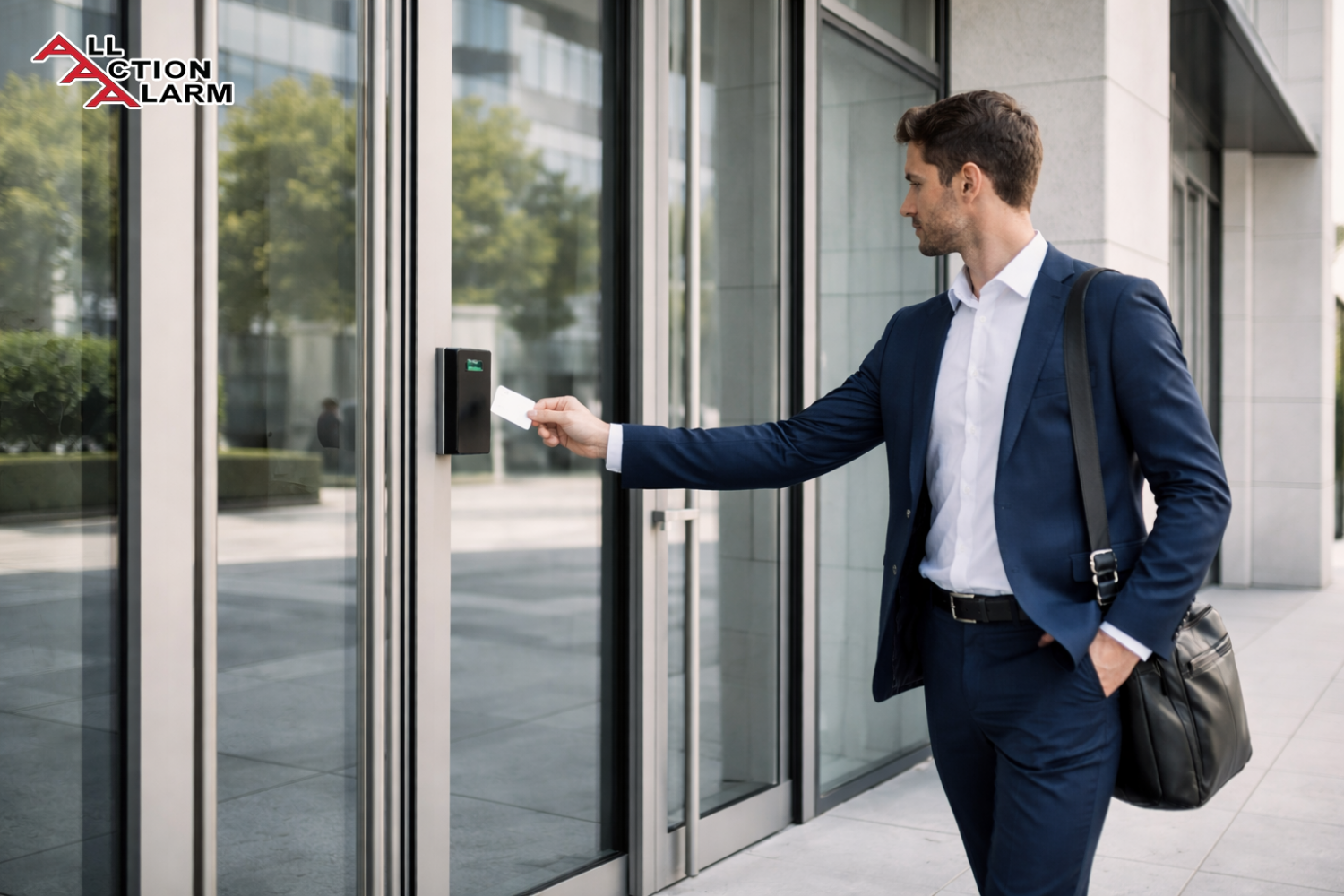
If you’ve ever tapped a card or waved a small plastic fob to unlock a door, you’ve already experienced one of the most widely used forms of building access security. Keycard and fob systems have been around for decades, but they’re far from outdated. In fact, they’ve become smarter, more flexible, and significantly more secure over time.
These systems work by assigning a unique credential—usually embedded in a card or fob—to each user. When scanned, the system verifies the credential against a database and decides whether to grant or deny access. It sounds simple, but behind the scenes, there’s a lot happening. Permissions can be customized based on roles, schedules, and even specific locations within a building.
One of the biggest advantages of keycard systems is their ease of use and scalability. Need to onboard a new employee? Just issue a new card. Someone leaves the company? Deactivate their access instantly. No need to change locks or collect physical keys. That level of flexibility is a game-changer for businesses with high employee turnover or multiple access points.
However, they’re not without limitations. Cards can be lost, stolen, or duplicated. That’s why many modern systems now combine keycards with additional authentication methods, such as PIN codes or mobile verification.
Despite these challenges, keycard and fob systems remain a reliable and cost-effective solution for many organizations. They strike a balance between convenience and security, making them a solid choice for offices, schools, and residential buildings alike.
And let’s be honest—there’s something satisfying about that quick tap and click of a door unlocking. It’s a small action that represents a much bigger system working seamlessly in the background.
Biometric Access Control Systems
Imagine walking up to a door and having it unlock just by recognizing your fingerprint or face—no cards, no codes, nothing to remember. That’s the promise of biometric access control systems, and it’s quickly becoming one of the most secure and futuristic approaches to building access security.
Biometric systems rely on unique physical or behavioral traits, such as fingerprints, facial recognition, iris scans, or even voice patterns, to verify identity. Unlike keycards or passwords, these identifiers are extremely difficult to replicate or steal. After all, you can forget your password or lose your card—but you can’t exactly misplace your fingerprint.
One of the biggest advantages here is accuracy and accountability. Every access event is tied directly to a specific individual, eliminating ambiguity. This makes biometrics especially valuable in high-security environments like data centers, research labs, and government facilities where knowing exactly who accessed what—and when—is critical.
However, no system is perfect. Biometric solutions can raise privacy concerns, especially when sensitive personal data is stored digitally. Organizations must ensure compliance with data protection regulations and use encryption to safeguard biometric information. There’s also the issue of environmental factors—poor lighting can affect facial recognition, while dirty or worn fingerprints can sometimes lead to false rejections.
Despite these challenges, advancements in AI and machine learning have significantly improved the reliability of biometric systems. Many now include liveness detection, which prevents spoofing attempts using photos or fake fingerprints.
In a world where security threats are becoming more sophisticated, biometrics offer a compelling solution. It’s not just about convenience—it’s about creating a level of security that’s deeply personal and incredibly difficult to bypass.
Mobile and Cloud-Based Access Solutions
Let’s face it—your smartphone is already the center of your digital life. So why not use it as your key? That’s exactly what mobile and cloud-based access solutions are doing, and they’re rapidly reshaping how building access security works in modern environments.
Instead of carrying physical cards or fobs, users can unlock doors using mobile credentials stored on their smartphones. These credentials are typically delivered via secure apps and use technologies like Bluetooth, NFC, or QR codes to communicate with access readers. It’s seamless, intuitive, and—most importantly—hard to lose.
But the real magic happens in the cloud. Cloud-based systems allow administrators to manage access remotely, from anywhere in the world. Need to grant temporary access to a contractor? Done in seconds. Want to revoke access instantly if a device is compromised? No problem. This level of control and flexibility is a major leap forward compared to traditional systems.
Another key benefit is real-time monitoring and analytics. Managers can track entry logs, identify unusual patterns, and even receive alerts for suspicious activity. It’s like having a security command center in your pocket.
Of course, with great convenience comes new considerations. These systems depend heavily on internet connectivity and must be protected against cyber threats. Strong encryption, multi-factor authentication, and regular software updates are essential to maintaining security.
Still, the advantages are hard to ignore. Mobile and cloud-based solutions are scalable, cost-effective, and incredibly user-friendly. They’re especially popular in coworking spaces, smart offices, and multi-tenant buildings where flexibility is key.
If traditional access systems are like physical keys, then mobile access is like upgrading to a smart lock that evolves with your needs. It’s not just the future—it’s already here.
Core Components of Access Security Systems
Access Control Panels
Behind every smooth tap of a keycard or scan of a fingerprint, there’s a brain making decisions in real time. That brain is the access control panel, and it plays a central role in any building access security system.
Think of the control panel as the system’s command hub. It receives data from authentication devices—like card readers or biometric scanners—then checks that information against a database to determine whether access should be granted. If everything checks out, the panel sends a signal to unlock the door. If not, access is denied, often with a log entry for future review.
Modern control panels are incredibly sophisticated. They can handle multiple entry points, complex permission structures, and real-time communication with cloud platforms. Some even include backup power systems to ensure continued operation during outages—a critical feature for high-security environments.
One of the key strengths of access control panels is their ability to enforce granular access policies. For example, an employee might be allowed into the building during business hours but restricted from certain areas like executive offices or server rooms. All of these rules are managed centrally, making it easy to update permissions as roles change.
However, the effectiveness of a control panel depends on proper configuration and maintenance. Outdated firmware or poorly defined access rules can create vulnerabilities. That’s why regular updates and audits are essential.
In essence, the access control panel is the silent decision-maker, working behind the scenes to ensure that every entry point is secure. Without it, even the most advanced authentication devices would be little more than high-tech doorbells.
Authentication Devices
If the control panel is the brain, then authentication devices are the senses. These are the tools that interact directly with users, collecting the information needed to verify identity. And in the world of building access security, they come in many shapes and forms.
The most common types include:
- Card readers and key fob scanners
- Biometric devices (fingerprint, facial recognition, iris scanners)
- PIN keypads
- Mobile credential readers
Each device serves the same basic purpose—confirming that a person is who they claim to be—but they do so in different ways. The choice of device often depends on the level of security required and the specific use case.
For instance, a standard office building might rely on card readers for convenience, while a research facility might combine biometric verification with PIN codes for added security. This layered approach, known as multi-factor authentication, significantly reduces the risk of unauthorized access.
What’s interesting is how these devices have evolved. Modern readers are faster, more accurate, and often equipped with anti-tampering features. Some can even detect suspicious behavior, like repeated failed attempts, and trigger alerts or lockdowns.
User experience is another important factor. Devices need to be intuitive and responsive—nobody wants to struggle with a scanner just to get into their workplace. That’s why many systems now prioritize touchless technologies, especially in a post-pandemic world.
In many ways, authentication devices are the front line of security. They’re the first point of contact, the gatekeepers that decide who gets in and who stays out. And as technology continues to advance, they’re only getting smarter.
Security Software and Management Platforms
Hardware might get most of the attention, but the real power of building access security lies in the software that ties everything together. Security management platforms are where all the data is processed, analyzed, and turned into actionable insights.
These platforms provide a centralized interface where administrators can configure access rules, monitor activity, and generate reports. Whether it’s a small office or a large enterprise with multiple locations, having a single dashboard to manage everything is invaluable.
One of the standout features of modern security software is automation. For example, access can be granted or revoked automatically based on predefined conditions, such as employment status or time of day. This reduces manual work and minimizes the risk of human error.
Another major advantage is integration. Today’s platforms can connect with other systems like video surveillance, alarm systems, and even HR databases. This creates a unified security ecosystem where different components work together seamlessly.
Here’s a quick comparison of traditional vs. modern security platforms:
| Feature | Traditional Systems | Modern Cloud-Based Systems |
|---|---|---|
| Access Management | Manual | Automated & Remote |
| Scalability | Limited | Highly Scalable |
| Data Insights | Basic Logs | Advanced Analytics |
| Integration | Minimal | व्यापक Integration |
Of course, with great capability comes responsibility. These platforms must be protected against cyber threats through encryption, regular updates, and secure user authentication.
Ultimately, security software is what transforms a collection of devices into a cohesive system. It’s where strategy meets execution, turning raw data into meaningful control. Without it, even the most advanced hardware would lack direction and coordination.
Benefits of Strong Building Access Security
Improved Safety and Risk Reduction
When people talk about building access security, they often focus on technology—cards, scanners, apps—but the real value shows up in something much more human: safety. At the end of the day, every system, every protocol, and every layer of authentication exists for one reason—to reduce risk and protect people, assets, and operations.
Think about a typical workplace. Employees come and go, visitors check in, vendors make deliveries, and sometimes former employees attempt to re-enter spaces they no longer belong in. Without a structured access system, all of this becomes chaotic and vulnerable. Strong access control introduces order. It ensures that only authorized individuals can enter specific areas, effectively shrinking the attack surface for potential threats.
One of the most immediate benefits is the prevention of unauthorized entry. Whether it’s theft, vandalism, or something more serious, controlling access drastically lowers the chances of incidents occurring in the first place. According to security studies, organizations with modern access control systems experience significantly fewer physical security breaches compared to those relying on traditional locks and keys.
There’s also a major advantage in emergency situations. Imagine a fire or security threat—knowing exactly who is inside the building can be critical. Advanced systems can generate real-time occupancy reports, helping emergency responders act faster and more effectively. Some systems even integrate with alarms to automatically unlock doors for safe evacuation or restrict access to dangerous zones.
And let’s not overlook internal risks. Not all threats come from outside. Sometimes, it’s about limiting access within the organization itself. For example, sensitive areas like server rooms, financial departments, or executive offices require tighter control. Access security ensures that employees only enter spaces relevant to their roles.
In essence, strong building access security doesn’t just react to danger—it actively prevents it from happening. It creates a controlled environment where risks are minimized, responses are faster, and everyone inside feels just a little bit safer.
Enhanced Monitoring and Accountability
Have you ever wondered what actually happens inside a building throughout the day? Who enters which rooms, at what times, and how often? Without a proper system, these questions are almost impossible to answer. That’s where enhanced monitoring and accountability come into play—two of the most underrated benefits of building access security.
Modern access control systems generate detailed activity logs for every entry and exit. Each interaction—whether it’s a card swipe, biometric scan, or mobile unlock—is recorded with a timestamp and user identity. This creates a digital trail that can be reviewed at any time. It’s like having a silent observer documenting everything without being intrusive.
Why does this matter? Because accountability changes behavior. When individuals know their actions are being logged, they’re more likely to follow protocols and less likely to engage in risky or unauthorized activities. It’s not about surveillance—it’s about responsibility and transparency.
These logs also become invaluable during investigations. If something goes wrong—a missing asset, a security breach, or even a simple policy violation—administrators can quickly trace back through the records to identify what happened. This reduces guesswork and speeds up resolution.
Another powerful feature is real-time monitoring. Security teams can receive instant alerts for unusual activity, such as repeated failed access attempts or entry during restricted hours. This allows for immediate action rather than delayed response.
Some systems even offer advanced analytics, highlighting patterns and trends. For instance, you might notice that certain areas are accessed more frequently at odd hours, prompting a review of security policies.
In a way, building access security acts like a digital memory for your facility. It remembers everything, connects the dots, and provides clarity when it’s needed most. And in a world where information is power, that level of insight is invaluable.
Common Security Threats and Vulnerabilities
Unauthorized Entry and Tailgating
No matter how advanced your building access security system is, there’s always one unpredictable factor: human behavior. One of the most common—and surprisingly overlooked—security risks is unauthorized entry through tailgating.
Tailgating happens when an unauthorized person follows someone with legitimate access into a restricted area. You’ve probably seen it before. Someone swipes their card, opens the door, and holds it open out of courtesy for the person behind them. It feels polite, even harmless—but from a security standpoint, it’s a major vulnerability.
The problem is that traditional access systems often assume that one authentication equals one entry. But tailgating breaks that assumption completely. It allows individuals to bypass security measures without triggering alarms or leaving a digital trace.
This issue is especially common in busy environments like offices, hospitals, and educational institutions, where people are constantly moving in and out. And because it relies on social norms—like politeness and trust—it’s difficult to eliminate through technology alone.
That said, there are ways to reduce the risk. Solutions include:
- Turnstiles or access gates that allow only one person per authentication
- Anti-tailgating sensors that detect multiple entries
- Employee training programs to raise awareness
Education plays a huge role here. When people understand the risks, they’re more likely to follow proper procedures—even if it feels a bit awkward at first.
Unauthorized entry isn’t always malicious, but it only takes one incident to cause serious damage. Whether it’s data theft, physical harm, or operational disruption, the consequences can be significant.
So while high-tech systems are essential, addressing human behavior is just as important. Because sometimes, the biggest security gap isn’t in the system—it’s in the habits of the people using it.
Cybersecurity Risks in Smart Systems
As buildings become smarter, so do the threats targeting them. Modern building access security systems are no longer isolated—they’re connected to networks, cloud platforms, and other digital infrastructure. And while this connectivity brings convenience and power, it also introduces a new category of risk: cybersecurity threats.
Think about it—if an access control system is connected to the internet, it can potentially be hacked. Unauthorized users might attempt to intercept data, manipulate access permissions, or even disable the system entirely. It’s like giving someone the keys to your building without them ever stepping foot inside.
One of the most common vulnerabilities is weak authentication protocols. If administrators use simple passwords or fail to enable multi-factor authentication, it becomes much easier for attackers to gain access. Similarly, outdated software can contain known vulnerabilities that hackers exploit.
Another concern is data privacy. Access systems often store sensitive information, including user identities, entry logs, and biometric data. If this information is compromised, the consequences go beyond physical security—it becomes a data breach with legal and reputational implications.
To mitigate these risks, organizations need to treat access control systems like any other critical IT infrastructure. This includes:
- Regular software updates and patch management
- Strong encryption protocols
- Network segmentation to isolate security systems
- Continuous monitoring for suspicious activity
Interestingly, cybersecurity and physical security are no longer separate domains—they’re deeply interconnected. A weakness in one can easily affect the other.
The takeaway? Smart systems require smart protection. As access control continues to evolve, so must the strategies used to defend it. Because in today’s world, security isn’t just about keeping doors locked—it’s about keeping systems secure from the inside out.
Best Practices for Implementing Access Security
Role-Based Access Control (RBAC)
If there’s one concept that can instantly make your building access security smarter and more efficient, it’s Role-Based Access Control (RBAC). Instead of assigning permissions individually—one person at a time—RBAC groups users based on their roles and assigns access rights accordingly. It’s like giving keys not to individuals, but to job functions.
Let’s break that down with a simple example. Imagine an office building with employees across different departments—HR, IT, finance, and maintenance. Instead of manually configuring access for each employee, you create roles such as “HR Staff,” “IT Admin,” or “Facilities Manager.” Each role comes with predefined permissions. When someone joins the company, they’re assigned a role, and just like that, they inherit all the necessary access rights.
This approach does two powerful things. First, it reduces administrative workload. No more juggling individual permissions every time someone changes positions or responsibilities. Second, it improves security consistency. Everyone in the same role has the same access level, minimizing the risk of accidental over-permission.
RBAC also supports the principle of least privilege, which means users only get access to what they absolutely need—nothing more, nothing less. This is critical for reducing internal risks. For instance, a marketing employee doesn’t need access to financial records or server rooms, and RBAC ensures those boundaries are enforced automatically.
Another advantage is scalability. As organizations grow, managing access manually becomes nearly impossible. RBAC allows systems to expand without becoming chaotic. Whether you’re adding ten employees or a thousand, the structure remains intact.
However, RBAC isn’t a “set it and forget it” solution. Roles must be reviewed regularly to ensure they still align with real-world responsibilities. Over time, roles can evolve, and outdated permissions can creep in if not monitored.
In essence, RBAC brings structure to complexity. It turns a potentially messy system into something organized, predictable, and secure. And when it comes to access control, that kind of clarity is invaluable.
Regular Audits and Updates
Here’s a hard truth—no matter how advanced your building access security system is today, it won’t stay secure forever unless you actively maintain it. That’s where regular audits and updates come in. Think of them as routine health checkups for your security infrastructure.
An audit involves reviewing your entire access control system—who has access to what, which credentials are active, and whether current permissions still make sense. You’d be surprised how often organizations discover inactive accounts, outdated roles, or unnecessary access privileges lingering in their systems. These aren’t just minor oversights—they’re potential entry points for security breaches.
For example, what happens when an employee leaves the company but their access isn’t revoked? Or when a contractor finishes a project but still has entry permissions? These gaps can go unnoticed without regular audits, and they create silent vulnerabilities.
Updates, on the other hand, focus on the technology itself. Software needs to be patched, firmware must be upgraded, and systems should be aligned with the latest security standards. Cyber threats evolve constantly, and outdated systems are easy targets.
There’s also a strategic side to this. Audits provide insights into how your building is actually being used. Are certain areas accessed more frequently than expected? Are there unusual patterns during off-hours? These insights can lead to smarter policies and improved security measures.
Many organizations now adopt a quarterly or bi-annual audit schedule, combined with automated alerts for anomalies. Some even bring in third-party security experts for unbiased evaluations.
At the end of the day, security isn’t static—it’s dynamic. It requires ongoing attention, adjustment, and improvement. Regular audits and updates ensure that your access control system doesn’t just start strong but stays strong over time.
Future Trends in Building Access Security
AI and Smart Surveillance Integration
The future of building access security isn’t just about controlling who gets in—it’s about understanding behavior, predicting risks, and responding intelligently in real time. That’s exactly where AI and smart surveillance integration come into play.
Artificial intelligence is transforming access control systems from reactive tools into proactive security solutions. Instead of simply logging events, AI can analyze patterns, detect anomalies, and even anticipate potential threats before they escalate.
For instance, imagine a system that notices an employee attempting to access restricted areas at unusual hours or repeatedly failing authentication. Instead of waiting for a human to review logs, the system can instantly flag this behavior, send alerts, or even temporarily restrict access. That’s not just monitoring—that’s intelligent decision-making.
When combined with surveillance cameras, AI becomes even more powerful. Modern systems can use facial recognition, motion detection, and behavioral analysis to enhance security. For example, if someone enters a building using a valid credential but doesn’t match the expected identity, the system can trigger an alert. This adds an extra layer of verification beyond traditional methods.
There’s also the concept of predictive security. By analyzing historical data, AI can identify trends and suggest improvements. Maybe certain entry points are more vulnerable at specific times, or certain access patterns indicate inefficiencies. These insights help organizations stay one step ahead.
Of course, this level of intelligence raises important questions about privacy and ethics. Organizations must strike a balance between security and individual rights, ensuring transparency and compliance with regulations.
Still, there’s no denying the impact. AI is turning access control into something far more dynamic and responsive. It’s not just about opening doors anymore—it’s about understanding everything that happens around them.
Contactless and Touchless Entry Systems
If there’s one trend that has rapidly accelerated in recent years, it’s the shift toward contactless and touchless entry systems. Driven by both convenience and health concerns, this innovation is redefining how people interact with building access security.
Traditional systems often require physical interaction—swiping a card, pressing a keypad, or scanning a fingerprint. But touchless solutions eliminate that need entirely. Instead, they rely on technologies like mobile credentials, facial recognition, Bluetooth, and wave-to-unlock sensors.
Why does this matter? For one, it improves hygiene. In a post-pandemic world, minimizing shared touchpoints has become a priority for many organizations. But beyond that, it also enhances user experience. Walking into a building without stopping to fumble for a card or press buttons feels seamless—almost invisible.
Mobile-based access is a big part of this trend. Users can unlock doors using their smartphones, often without even taking them out of their pockets. The system detects proximity and grants access automatically. It’s fast, intuitive, and surprisingly secure.
Facial recognition is another key player. With just a glance, users can gain entry, making the process both efficient and futuristic. Combined with AI, these systems can adapt to changes in appearance, lighting conditions, and even detect spoofing attempts.
Of course, adoption comes with challenges. Privacy concerns, implementation costs, and user acceptance all play a role. Not everyone is comfortable with facial recognition, and organizations must address these concerns transparently.
Still, the direction is clear. Contactless systems are not just a temporary trend—they’re becoming the new standard. They represent a shift toward security that is frictionless, intelligent, and user-centric.
Conclusion
Building access security has evolved from simple locks and keys into a sophisticated ecosystem of technologies, strategies, and intelligent systems. From keycards and biometrics to AI-driven analytics and cloud-based platforms, the way we secure physical spaces has fundamentally changed. What once required manual oversight can now be automated, monitored in real time, and optimized continuously.
The real takeaway is this—security is no longer just about restricting access; it’s about managing it intelligently. It’s about knowing who is in your building, why they’re there, and whether they should be. It’s about reducing risks without creating friction, and enhancing safety without compromising convenience.
As threats become more complex, the systems designed to prevent them must become smarter. Organizations that invest in modern access control solutions aren’t just protecting their assets—they’re building trust, improving efficiency, and preparing for the future.
Whether you’re managing a small office or a large enterprise, the principles remain the same: control access, monitor activity, and adapt continuously. Because in today’s world, security isn’t optional—it’s essential.
FAQs
1. What is the best type of building access control system?
The best system depends on your needs. For most businesses, a combination of keycard access and mobile-based solutions offers a balance of convenience and security. High-security environments may benefit from biometric systems for added protection.
2. How often should access control systems be updated?
Software updates should be applied as soon as they are available, while full system audits are recommended at least twice a year to identify vulnerabilities and outdated permissions.
3. Are biometric systems Safe?
Yes, modern biometric systems are highly secure, especially when combined with encryption and liveness detection. However, they must be implemented carefully to address privacy and data protection concerns.
4. Can building access systems be hacked?
Like any connected system, access control platforms can be targeted. That’s why cybersecurity measures such as strong passwords, multi-factor authentication, and regular updates are essential.
5. What is tailgating in access control?
Tailgating occurs when an unauthorized person follows someone with valid access into a restricted area without authentication. It’s a common vulnerability that requires both technology and user awareness to prevent.
About All Action Alarm: Your Trusted Partner in Commercial Security Solutions
AllActionAlarm.com is Long Island’s top choice for state-of-the-art commercial security systems, providing unmatched protection and peace of mind for businesses of all sizes. With years of expertise, we specialize in creating customized security solutions, combining cutting-edge technology with seamless installation and 24/7 monitoring. Whether it’s high-definition surveillance, advanced access control, or intrusion detection, we deliver systems designed to safeguard your assets and personnel.
Our team of certified professionals is committed to offering the best security systems in Long Island, New York. We understand the unique challenges businesses face and work closely with you to develop a comprehensive security plan that fits your needs. We don’t just sell equipment; we partner with you for the long haul, ensuring your business remains protected against any threat.
Don’t leave your business’s safety to chance—contact us at (631) 549-7225 today for a free consultation and experience the AllActionAlarm difference!
For more info you may want to read this article about Commercial Alarm System.
SOURCEs
https://www.kastle.com/safety-wellness/getting-america-back-to-work/
https://nvlpubs.nist.gov/nistpubs/SpecialPublications/NIST.SP.800-53r5.pdf
https://www.securityindustry.org/industry-standards/access-control/
https://www.ifsecglobal.com/access-control/
https://www.sans.org/security-awareness-training/
https://www.entrust.com/resources


 Ca.garcia.s, CC BY-SA 4.0
