
Building Security Access Control Systems: The Ultimate Guide

What Are Access Control Systems?
Definition and Core Purpose
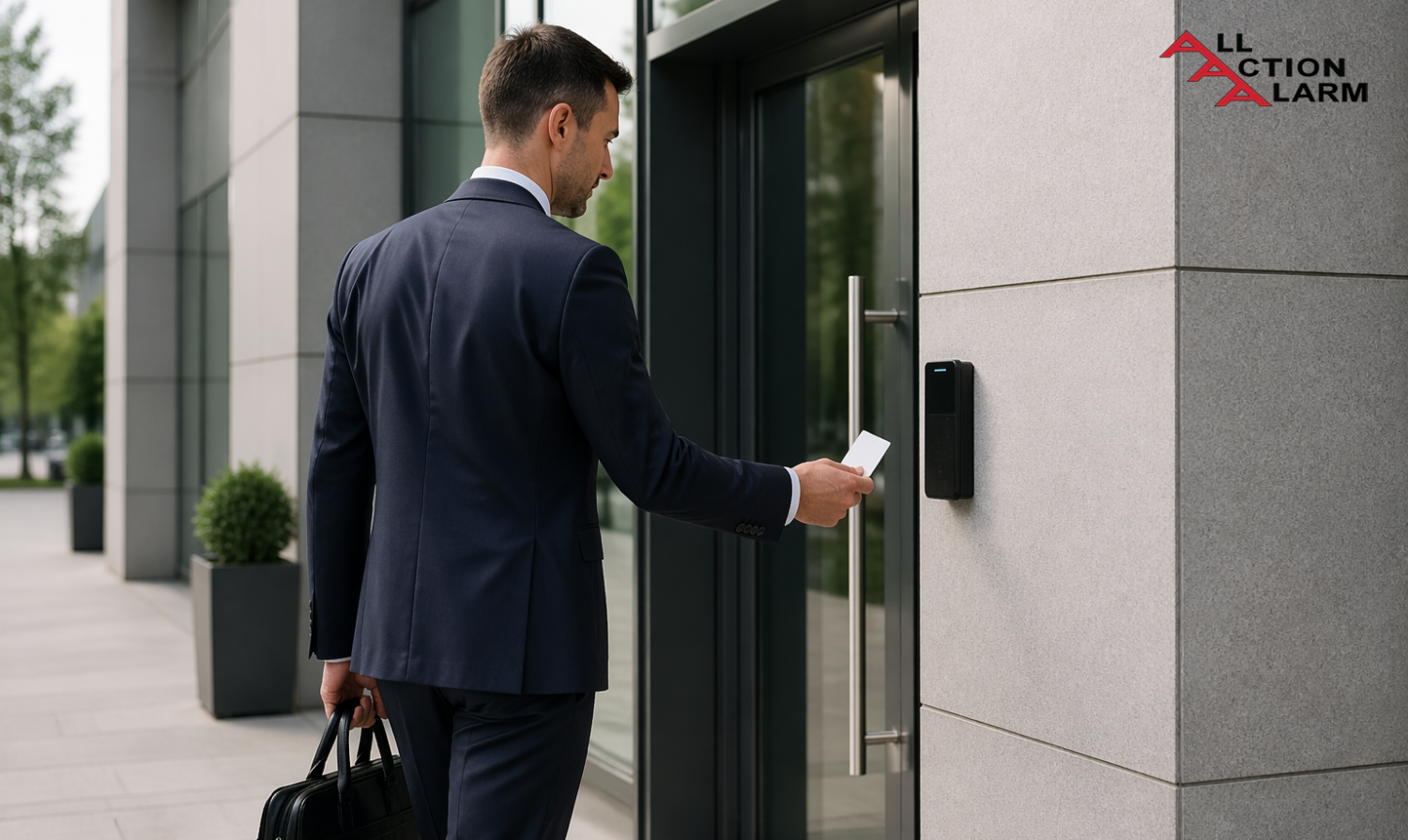
When you think about building security, what’s the first thing that comes to mind? Security guards? Locked doors? Maybe surveillance cameras? While all of those play a role, access control systems are the real gatekeepers of modern building security. They determine who gets in, when they get in, and where they’re allowed to go once inside. In simple terms, an access control system is a security solution that regulates entry to physical or digital spaces using authentication methods.
Instead of relying on traditional keys—which can be lost, duplicated, or stolen—modern systems use smarter credentials like keycards, biometrics, or even smartphones. According to recent industry data, over 70% of commercial buildings have shifted toward electronic access control systems, reflecting a growing demand for smarter and more scalable security solutions. That shift isn’t just about convenience; it’s about control, accountability, and real-time monitoring.
Think of access control like a highly selective bouncer at a club. Not only does it check IDs, but it also remembers who came in, at what time, and whether they’re allowed into VIP areas. This level of precision is what makes access control systems essential for offices, hospitals, schools, and even residential complexes.
Beyond just letting people in or keeping them out, these systems also create a digital audit trail. This means you can track every entry and exit, which becomes incredibly useful during investigations or compliance checks. It’s not just about security—it’s about visibility and intelligence.
How Access Control Differs from Traditional Security
Traditional security measures often rely on static methods—locks, keys, and guards. While these can be effective, they lack flexibility and scalability. Imagine having to change all the locks in a building because one employee lost a key. Sounds expensive and inconvenient, right? That’s exactly the kind of problem access control systems are designed to eliminate.
With access control, permissions can be updated instantly through software. If an employee leaves the company, their access can be revoked with a single click. No need to replace hardware or worry about unauthorized duplication. This dynamic control is a game changer, especially for large organizations managing hundreds or thousands of users.
Another key difference lies in integration capabilities. Modern access control systems can seamlessly connect with other security solutions like CCTV cameras, alarm systems, and even fire safety mechanisms. For example, in an emergency, doors can automatically unlock to allow safe evacuation while still maintaining control over restricted areas.
There’s also a significant difference in terms of data and analytics. Traditional security doesn’t provide insights, but access control systems generate valuable data. You can analyze traffic patterns, identify unusual behavior, and optimize building usage. It’s like turning your security system into a smart assistant that not only protects but also informs.
And let’s not ignore the human factor. Guards can make mistakes, keys can be copied, and locks can be picked. But a well-designed access control system minimizes human error and adds multiple layers of authentication, making unauthorized access significantly harder.
Types of Access Control Systems
Discretionary Access Control (DAC)
When diving into the world of access control systems, one of the first models you’ll encounter is Discretionary Access Control (DAC). Think of DAC as the “owner decides” model. In this setup, the person who owns or manages a resource—like a building manager or system administrator—has the authority to decide who gets access and what level of access they receive. It’s flexible, easy to implement, and commonly used in smaller organizations where rigid security protocols might feel like overkill.
Imagine you’re managing a small office. With DAC, you can grant access to certain employees for specific rooms simply because you trust them or because their role requires it. The control is entirely in your hands. That sounds convenient, right? It is—but there’s a catch. This flexibility can sometimes lead to security vulnerabilities. Since permissions can be freely shared or modified, there’s a higher risk of unauthorized access if controls aren’t carefully monitored.
According to cybersecurity experts, DAC systems are often more susceptible to internal threats because users can unintentionally grant access to others without fully understanding the implications. It’s like giving someone a spare key to your house—they might use it responsibly, but there’s always a risk.
That said, DAC still has its place. It’s ideal for environments where collaboration and flexibility are more important than strict security enforcement. Small businesses, startups, and creative workspaces often lean toward DAC because it allows them to move quickly without getting bogged down in complex permission structures.
However, if you’re managing a large building or dealing with sensitive information, relying solely on DAC might not be the best choice. It’s a good starting point, but most modern organizations combine it with more structured models to create a balanced security approach.
Mandatory Access Control (MAC)
Now, if DAC is all about flexibility, Mandatory Access Control (MAC) is its strict, no-nonsense counterpart. In a MAC system, access decisions are not made by individual users but by a central authority based on predefined policies. This model is often used in high-security environments like government facilities, military installations, and research labs where data sensitivity is extremely high.
In a MAC setup, every user and resource is assigned a security label. Access is granted only if the user’s clearance level matches or exceeds the classification of the resource. There’s no room for personal discretion here—everything is governed by rules. It’s like having a security system that says, “You either meet the criteria, or you don’t. No exceptions.”
This rigidity is exactly what makes MAC so secure. It minimizes the risk of human error and ensures that sensitive areas remain protected at all times. According to industry reports, organizations using MAC experience significantly fewer data breaches related to unauthorized access compared to more flexible models.
But let’s be real—this level of control can feel restrictive. Implementing MAC requires careful planning, and managing it can be complex. Employees might find it frustrating if they’re unable to access resources they need due to strict policies. It’s a bit like working in a building where every door requires special clearance—it keeps things secure, but it can slow you down.
Despite these challenges, MAC is invaluable in environments where security cannot be compromised. If you’re dealing with sensitive intellectual property, classified information, or critical infrastructure, MAC provides the level of protection you need.
Role-Based Access Control (RBAC)
Sitting comfortably between DAC’s flexibility and MAC’s rigidity is Role-Based Access Control (RBAC)—arguably the most widely used model in modern access control systems. Instead of assigning permissions to individuals, RBAC assigns them based on roles within an organization. For example, a manager might have access to certain areas that a junior employee does not.
This approach simplifies access management significantly. Instead of configuring permissions for each user, you define roles and assign users to those roles. It’s efficient, scalable, and идеально suited for organizations of all sizes. In fact, studies show that over 80% of enterprises use RBAC as their primary access control model.
Think of RBAC as a well-organized office hierarchy. Everyone knows their responsibilities, and access is granted accordingly. It reduces confusion, minimizes errors, and ensures that people only have access to what they need—nothing more, nothing less.
One of the biggest advantages of RBAC is its ability to adapt to organizational changes. When someone gets promoted or changes departments, you simply update their role, and their access permissions adjust automatically. No need to manually reconfigure everything.
RBAC also enhances security by enforcing the principle of least privilege, which means users only get access to the resources necessary for their job. This reduces the risk of both accidental and intentional misuse.
Of course, RBAC isn’t perfect. Defining roles and permissions requires careful planning, especially in complex organizations. But once it’s set up, it becomes a powerful tool for managing access efficiently and securely.
Key Components of Access Control Systems
Access Control Panels
At the heart of every access control system lies the access control panel, often referred to as the “brain” of the operation. This is the component that processes all access requests, makes decisions based on predefined rules, and communicates with other parts of the system. Without it, your access control setup would be like a car without an engine—completely non-functional.
When someone swipes a keycard or scans their fingerprint, the request is sent to the control panel. The panel then verifies the credentials and decides whether to grant or deny access. This entire process happens in a matter of seconds, often so quickly that users don’t even notice the complexity behind it.
Modern access control panels are incredibly advanced. They can handle multiple entry points, integrate with other security systems, and even operate offline if needed. This ensures that your building remains secure even during network outages.
Another important feature is scalability. Whether you’re managing a small office or a multi-building campus, the control panel can be configured to handle varying levels of complexity. It’s like having a central command center that keeps everything running smoothly.
Security experts often emphasize the importance of choosing a reliable control panel because it directly impacts the system’s performance and reliability. A poorly designed panel can lead to delays, errors, or even security breaches.
Credentials and Authentication Methods
Credentials are essentially the “keys” to your access control system—but they’re far more sophisticated than traditional metal keys. These can include keycards, PIN codes, biometric data, or mobile credentials, each offering different levels of security and convenience.
Keycards and fobs are among the most common credentials. They’re easy to use, cost-effective, and can be quickly replaced if lost. However, they can still be stolen or shared, which is why many organizations are moving toward more secure options.
Biometric authentication—like fingerprint or facial recognition—adds an extra layer of security by using unique physical traits. It’s incredibly difficult to replicate, making it one of the most secure methods available. According to recent data, biometric systems have reduced unauthorized access incidents by up to 50% in high-security environments.
Mobile-based access is another growing trend. With smartphones becoming an integral part of our lives, using them as access credentials feels natural. It also allows for remote management and real-time updates, making it a convenient option for both users and administrators.
The key is to choose a combination of authentication methods that balances security and user experience. Too many layers can frustrate users, while too few can compromise security.
Software and Management Platforms
If the control panel is the brain, then the software platform is the nervous system that connects everything together. This is where administrators manage users, set permissions, monitor activity, and generate reports. It’s the interface that gives you full control over your access control system.
Modern platforms are typically cloud-based, offering remote access and real-time updates. This means you can manage your building’s security from anywhere in the world. Need to grant access to a contractor at the last minute? No problem—you can do it from your phone.
One of the most valuable features of these platforms is data analytics. You can track who enters and exits the building, identify patterns, and even detect anomalies. This information can be used to improve security, optimize operations, and make informed decisions.
Integration is another key advantage. Access control software can work seamlessly with other systems like surveillance cameras, alarm systems, and HR databases. This creates a unified security ecosystem that’s both efficient and effective.
However, with great power comes great responsibility. It’s essential to ensure that your software is regularly updated and protected against cyber threats. After all, a digital system is only as secure as its weakest link.
Authentication Methods Explained
Keycards and Fobs
Let’s start with one of the most familiar and widely used authentication methods: keycards and fobs. If you’ve ever worked in an office, stayed in a hotel, or accessed a gym, chances are you’ve used one. These small devices may seem simple, but they play a powerful role in modern building security access control systems.
Keycards typically use technologies like RFID (Radio Frequency Identification) or NFC (Near Field Communication) to communicate with card readers. When you tap or swipe your card, the system verifies your credentials almost instantly. It’s quick, seamless, and user-friendly—which is exactly why it remains so popular. Fobs work similarly but are often more durable and designed to be attached to keychains, making them convenient for everyday use.
One of the biggest advantages of keycards and fobs is their affordability and scalability. You can easily issue them to hundreds or even thousands of users without breaking the bank. If someone loses their card, you don’t need to replace locks—just deactivate the card and issue a new one. That’s a huge improvement over traditional keys.
However, they’re not without drawbacks. Cards can be lost, stolen, or even shared between users. This creates potential security gaps, especially in environments where sensitive areas need strict protection. To address this, many organizations combine keycards with additional authentication methods like PIN codes or biometrics, creating a multi-factor authentication system.
Despite these limitations, keycards and fobs remain a cornerstone of access control systems. They strike a balance between convenience and security, making them ideal for businesses, schools, and residential complexes alike. Think of them as the “entry-level” solution that still packs a punch when implemented.
Biometric Systems
Now let’s step into the future—or what feels like it—with biometric authentication systems. Instead of relying on something you carry, biometrics use something you are. This includes fingerprints, facial recognition, iris scans, and even voice recognition. It’s like turning your body into a living, breathing key.
Biometric systems are widely regarded as one of the most secure authentication methods available. Why? Because biometric traits are unique to each individual and extremely difficult to replicate. You can lose a keycard, but you can’t lose your fingerprint. According to industry research, biometric systems can achieve accuracy rates of over 99%, significantly reducing the risk of unauthorized access.
These systems are especially valuable in high-security environments like data centers, laboratories, and government facilities. But they’re also becoming more common in everyday settings, from office buildings to smartphones. Facial recognition, in particular, has seen rapid adoption due to its speed and contactless nature—a feature that gained importance during global health concerns.
Of course, biometrics aren’t perfect. Privacy concerns are a major consideration. People may feel uncomfortable knowing their biometric data is being stored, even if it’s encrypted. There’s also the issue of cost—biometric systems tend to be more expensive to install and maintain compared to traditional methods.
Still, the benefits often outweigh the drawbacks. Biometrics offer a level of security, convenience, and sophistication that’s hard to match. It’s like having a lock that only responds to you—and no one else.
Mobile-Based Access
Here’s where things get really interesting. Mobile-based access control is transforming the way we think about security by turning smartphones into digital keys. Instead of carrying a card or remembering a PIN, you simply use an app or digital wallet to unlock doors. It’s modern, intuitive, and incredibly convenient.
This method leverages technologies like Bluetooth, NFC, and QR codes to grant access. When you approach a door, your phone communicates with the access control system, verifying your credentials in real time. It’s fast, touchless, and feels almost futuristic.
One of the standout advantages of mobile access is its flexibility. Administrators can grant or revoke access instantly, no matter where they are. Need to give a contractor temporary access for a few hours? Done. Want to restrict entry after business hours? Easy. This level of control is a game changer for dynamic environments.
Mobile access also enhances security. Smartphones are typically protected by passwords, biometrics, or both, adding an extra layer of authentication. Plus, since people rarely leave their phones behind, the risk of lost credentials is significantly reduced.
According to recent trends, mobile access adoption has grown by over 30% annually, driven by the rise of smart buildings and IoT integration. It’s not just a trend—it’s quickly becoming the new standard.
That said, it does depend on users having compatible devices and reliable connectivity. But as technology continues to evolve, these limitations are becoming less significant.
Benefits of Access Control Systems
Enhanced Security
At its core, the primary goal of any access control system is to enhance security—and it does this exceptionally well. Unlike traditional locks and keys, these systems offer multiple layers of protection, making it significantly harder for unauthorized individuals to gain access.
One of the biggest advantages is real-time monitoring. You can see exactly who is entering or leaving your building at any given moment. This visibility allows you to respond quickly to suspicious activity and prevent potential security breaches before they escalate.
Access control systems also provide detailed audit trails. Every entry attempt—whether successful or not—is recorded. This data can be invaluable during investigations, helping you understand what happened and when. It’s like having a digital security logbook that never misses a detail.
Another key benefit is the ability to implement customized access levels. Not everyone needs access to every area, and these systems allow you to enforce that with precision. For example, employees can access their workspaces, while sensitive areas remain restricted to authorized personnel only.
Security experts often emphasize that layered security is the most effective approach. By combining access control with surveillance cameras, alarms, and other systems, you create a robust defense that’s difficult to bypass.
Operational Efficiency
Beyond security, access control systems also bring a surprising benefit: operational efficiency. They streamline processes, reduce administrative workload, and make managing a building far more efficient.
Think about how much time and effort goes into managing physical keys. Issuing them, tracking them, replacing them—it all adds up. With an access control system, these tasks are handled digitally. You can grant or revoke access with a few clicks, saving both time and resources.
These systems also integrate seamlessly with other technologies, such as HR software and attendance tracking systems. This means you can automate processes like employee check-ins, reducing the need for manual record-keeping. It’s like having a smart assistant that handles administrative tasks in the background.
Another advantage is scalability. As your organization grows, your access control system can grow with it. Adding new users, doors, or locations is straightforward and doesn’t require a complete overhaul.
From reducing human error to improving workflow, access control systems do more than just secure your building—they optimize how it operates. And in today’s fast-paced world, that’s a benefit you can’t afford to overlook.
Choosing the Right Access Control System
Factors to Consider
Choosing the right building security access control system isn’t just about picking the most advanced technology or the most affordable option—it’s about finding the right fit for your specific needs. Think of it like buying a car. A sports car might look exciting, but if you need to transport a team or equipment, it’s probably not the best choice. The same logic applies here.
One of the first factors to consider is the size and type of your building. A small office with a handful of employees will have very different requirements compared to a large corporate campus or a multi-tenant residential complex. Larger environments often require scalable systems that can handle multiple entry points, integrate with other technologies, and support a high volume of users without performance issues.
Next, consider the level of security you actually need. Not every building requires military-grade protection. For example, a retail store might prioritize ease of access and customer flow, while a data center demands strict authentication and restricted zones. Understanding your risk level helps you avoid overcomplicating your system—or worse, under-securing your property.
Another critical aspect is user experience. If your system is too complicated, people will find ways around it, which defeats the purpose of having it in the first place. A good access control system should be intuitive, fast, and reliable. Whether it’s keycards, biometrics, or mobile access, the technology should make life easier—not harder.
Integration capabilities also matter more than many people realize. Modern buildings rely on interconnected systems, from surveillance cameras to fire alarms and even HVAC controls. Choosing a system that can integrate seamlessly with your existing infrastructure ensures a smoother operation and better overall efficiency.
Finally, don’t overlook future scalability. Your organization might grow, your needs might change, and your system should be able to adapt. Investing in a flexible solution now can save you significant time and money down the line.
Cost vs Value Analysis
Let’s talk about money—because, realistically, budget plays a major role in any decision. But here’s the thing: when it comes to access control systems, focusing solely on cost can be a costly mistake. It’s not about finding the cheapest option; it’s about understanding the value you’re getting.
At first glance, traditional lock-and-key systems might seem more affordable. But when you factor in the costs of lost keys, lock replacements, and security risks, the savings quickly disappear. In contrast, access control systems may have a higher upfront cost, but they offer long-term benefits that often outweigh the initial investment.
Here’s a simple comparison to put things into perspective:
| Feature | Traditional Locks | Access Control Systems |
|---|---|---|
| Initial Cost | Low | Moderate to High |
| Maintenance | High (lock changes) | Low |
| Security Level | Basic | Advanced |
| Scalability | Limited | Highly Scalable |
| Monitoring | None | Real-Time Tracking |
What this table doesn’t fully capture is the hidden value of access control systems. For example, the ability to prevent unauthorized access can save you from potential losses, legal issues, or reputational damage. According to industry estimates, security breaches can cost businesses thousands to millions of dollars, depending on the severity.
There’s also the value of time and efficiency. Automating access management reduces administrative overhead, allowing your team to focus on more important tasks. Over time, these savings can add up significantly.
So, instead of asking, “What’s the cheapest option?” a better question is, “What solution provides the best return on investment?” When you look at it that way, access control systems often come out on top.
Installation and Maintenance Best Practices
Professional Installation vs DIY
When it comes to installing a building access control system, you might be tempted to take the DIY route—especially with so many plug-and-play solutions available today. And yes, for very small setups, that might work. But for most buildings, especially those with multiple entry points or higher security needs, professional installation is the smarter choice.
Why? Because access control systems are more complex than they appear. They involve wiring, network configuration, software integration, and sometimes even compliance with local regulations. A small mistake during installation can lead to system failures, security vulnerabilities, or ongoing performance issues.
Professional installers bring expertise and experience to the table. They understand how to design a system that fits your building’s layout, ensures optimal coverage, and integrates seamlessly with other security components. It’s like hiring an architect instead of trying to design your own house—you get better results and fewer headaches.
That said, DIY systems do have their place. They’re ideal for small offices, retail shops, or residential properties where the requirements are relatively simple. These systems are often more affordable and easier to set up, making them a good entry point for those new to access control.
Ultimately, the decision comes down to complexity and risk tolerance. If security is critical and the system needs to be reliable, professional installation is worth the investment. If your needs are minimal and you’re comfortable with technology, a DIY approach might suffice.
Ongoing Maintenance Requirements
Installing your access control system is just the beginning. To keep it running smoothly and securely, ongoing maintenance is essential. Think of it like maintaining a car—you wouldn’t expect it to run forever without regular check-ups, right?
One of the most important aspects of maintenance is software updates. These updates often include security patches, new features, and performance improvements. Ignoring them can leave your system vulnerable to cyber threats or cause compatibility issues with other technologies.
Hardware maintenance is equally important. Card readers, biometric scanners, and control panels should be inspected regularly to ensure they’re functioning properly. Dust, wear and tear, or environmental factors can affect performance over time.
Another key task is user management. As employees join, leave, or change roles, their access permissions need to be updated accordingly. Failing to do so can result in unauthorized access or operational inefficiencies.
It’s also a good idea to conduct periodic security audits. These audits help identify potential weaknesses, ensure compliance with policies, and verify that the system is being used as intended. According to security professionals, regular audits can reduce vulnerabilities by up to 40%.
In short, maintenance isn’t just about fixing problems—it’s about preventing them. A well-maintained access control system remains reliable, secure, and effective for years to come.
Conclusion
Building security has come a long way from simple locks and keys, evolving into intelligent systems that combine technology, data, and automation. Access control systems sit at the center of this transformation, offering a smarter, more efficient way to manage who can enter your building and what they can access once inside.
From understanding different control models like DAC, MAC, and RBAC to exploring authentication methods such as biometrics and mobile access, it’s clear that there’s no one-size-fits-all solution. The right system depends on your unique needs, priorities, and environment. But one thing remains constant: investing in a well-designed access control system is investing in security, efficiency, and peace of mind.
As technology continues to evolve, these systems will only become more advanced, integrating with AI, IoT, and smart building technologies. The question is no longer whether you need an access control system—it’s how soon you can implement one that truly works for you.
FAQs
1. What is the main purpose of an access control system?
The primary purpose is to regulate and monitor who can enter or exit a building or specific areas within it. It enhances security by ensuring only authorized individuals have access.
2. Are biometric systems safe and reliable?
Yes, biometric systems are highly secure and reliable, with accuracy rates often exceeding 99%. However, they require proper data protection measures to address privacy concerns.
3. Can access control systems be integrated with other security systems?
Absolutely. Most modern systems can integrate with CCTV, alarm systems, and even building management systems for a unified security approach.
4. How much does an access control system cost?
Costs vary depending on the size, complexity, and features of the system. While initial costs may be higher than traditional locks, long-term savings often make them more cost-effective.
5. Is mobile-based access better than keycards?
It depends on your needs. Mobile access offers greater convenience and flexibility, while keycards remain a reliable and cost-effective option. Many organizations use both for added security.
About All Action Alarm: Your Trusted Partner in Commercial Security Solutions
AllActionAlarm.com is Long Island’s top choice for state-of-the-art commercial security systems, providing unmatched protection and peace of mind for businesses of all sizes. With years of expertise, we specialize in creating customized security solutions, combining cutting-edge technology with seamless installation and 24/7 monitoring. Whether it’s high-definition surveillance, advanced access control, or intrusion detection, we deliver systems designed to safeguard your assets and personnel.
Our team of certified professionals is committed to offering the best security systems in Long Island, New York. We understand the unique challenges businesses face and work closely with you to develop a comprehensive security plan that fits your needs. We don’t just sell equipment; we partner with you for the long haul, ensuring your business remains protected against any threat.
Don’t leave your business’s safety to chance—contact us at (631) 549-7225 today for a free consultation and experience the AllActionAlarm difference!
For more info you may want to read this article about Commercial Alarm System.
SOURCEs
https://www.marketsandmarkets.com/Market-Reports/access-control-market-1016.html
https://www.grandviewresearch.com/industry-analysis/access-control-market
https://www.fortunebusinessinsights.com/access-control-system-market-102591
https://csrc.nist.gov/publications/detail/sp/800-53/rev-5/final
https://www.iso.org/standard/27001
https://csrc.nist.gov/projects/role-based-access-control
https://www.ibm.com/docs/en/spectrum-protect/8.1.12?topic=control-access-models
https://www.techtarget.com/searchsecurity/definition/mandatory-access-control-MAC
https://www.nist.gov/programs-projects/biometrics
https://www.thalesgroup.com/en/markets/digital-identity-and-security/government/biometrics
https://www.securityindustry.org/industry-standards/mobile-credentials/


 Ca.garcia.s, CC BY-SA 4.0
