
Perimeter Intrusion Detection
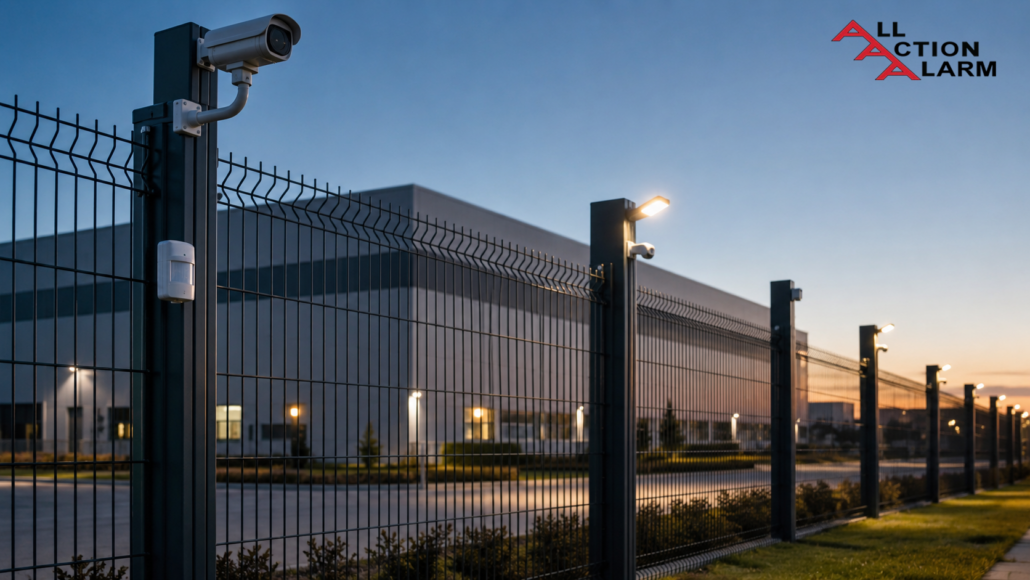

What Perimeter Intrusion Detection Really Means
Perimeter intrusion detection is the security practice of identifying, confirming, and responding to unauthorized attempts to cross a protected boundary before the intruder reaches the most valuable area of a site. Think of it as the security equivalent of hearing footsteps on the porch before someone reaches the front door. A fence, wall, gate, hedge, or property line may mark the physical edge of a site, but a perimeter intrusion detection system, often called PIDS, turns that edge into an active warning zone. Instead of waiting for a break-in to happen inside a building, the system gives security teams earlier awareness, more response time, and better control over what happens next.
In simple terms, perimeter intrusion detection is not just about catching someone climbing a fence. It is about creating a smarter outer shell around a property. That shell may include sensors on fences, buried cables under the soil, radar units watching open ground, thermal cameras scanning dark areas, and video analytics that can tell the difference between a person, an animal, a vehicle, or blowing debris. When these tools work together, the perimeter becomes less like a passive barrier and more like a nervous system. It senses pressure, vibration, movement, heat, or unusual activity and sends that information to the people or platforms responsible for protecting the site.
The real value of perimeter security is time. A burglar alarm inside a building tells you someone may already be where they should not be. A perimeter alert tells you someone is approaching, testing, cutting, climbing, crawling, driving, or loitering near the boundary. That early signal changes everything. Security guards can investigate sooner, cameras can automatically zoom to the right location, lights can switch on, loudspeakers can issue warnings, and access control systems can lock down sensitive zones. For high-risk sites, those extra seconds or minutes can prevent theft, sabotage, vandalism, data center disruption, equipment damage, or even life-safety incidents.
A strong perimeter intrusion detection strategy also recognizes that every site has a different threat picture. A remote solar farm does not face the exact same risk as a prison, warehouse, airport, military base, school campus, gated community, or chemical storage facility. Some sites need long-range detection across open land. Others need precise fence-line alerts in noisy urban environments. Some must reduce false alarms caused by wildlife, wind, rain, snow, or nearby traffic. That is why PIDS is not a single device you buy and forget. It is a planned security layer designed around terrain, assets, people, operations, and risk.
Why Traditional Fences Are No Longer Enough
A fence still matters, but a fence by itself is no longer enough for serious security. A traditional fence is like a locked diary sitting on a table: it sends a message, but it cannot tell you who touched it, when they touched it, or whether someone found a way around it. Even a tall fence with barbed wire can be climbed, cut, lifted, tunneled under, or bypassed through a weak gate. In many places, the fence simply delays an intruder for a short time. Without detection, nobody may know anything happened until a camera review, damaged equipment, missing inventory, or a triggered indoor alarm reveals the problem later.
This is especially important because modern threats are not always dramatic or obvious. Intruders may test a perimeter slowly over several nights. They may walk along the fence looking for blind spots, weak mesh, loose posts, broken lights, or camera angles that do not overlap. In industrial and commercial settings, thieves may target copper, fuel, tools, vehicles, warehouse stock, construction materials, or sensitive electronics. In critical environments, the concern can be sabotage, protest activity, unauthorized surveillance, or disruption of operations. A static barrier cannot understand intent. It cannot distinguish between someone passing nearby and someone deliberately probing the boundary.
Traditional fencing also struggles because many properties are large, irregular, and difficult to patrol. A guard may be responsible for acres of land, multiple gates, dark corners, loading areas, drainage channels, tree lines, and remote equipment yards. Even a motivated guard cannot stare at every section of fence at once. Cameras help, but cameras without analytics or alarms often become passive recording tools. They show what happened after the event, not always what is happening right now. A perimeter intrusion detection system bridges that gap by turning the outer boundary into a live source of alerts.
There is also the simple reality of response. Security is not just about keeping people out; it is about knowing where to respond. If an intruder cuts through a fence on the north side of a warehouse complex, the guard needs a specific location, not a vague suspicion. If someone enters a utility substation after dark, operators need to verify the event quickly and dispatch the right response without wasting time. A fence says, “This is private.” A PIDS says, “Something is happening at Zone 7, near the east vehicle gate, and the camera is already showing movement.” That difference can turn a security program from reactive to proactive.
How Perimeter Intrusion Detection Systems Work
A perimeter intrusion detection system works by collecting signals from the boundary of a protected site, analyzing those signals, and generating alerts when the activity matches a likely intrusion. The process sounds simple, but the details matter a lot. A good PIDS must detect real threats without overwhelming operators with false alarms. That means it needs the right sensors, smart placement, accurate calibration, reliable communication, and a clear response plan. When any of those pieces are weak, the system may become noisy, ignored, or expensive to maintain. When the pieces are aligned, it can become one of the most valuable layers in a security operation.
Most systems begin with sensors. These sensors may be physical, electronic, optical, or software-based. A fence-mounted cable might detect vibration from cutting or climbing. A buried sensor might detect footsteps or vehicle movement. A radar unit might detect motion across open ground. A thermal camera might identify a human shape in darkness, fog, or low light. Video analytics might examine live camera feeds and classify objects based on size, speed, direction, and behavior. Each sensor type sees the world in a different way, and that is why layered detection is usually stronger than relying on one technology alone.
After detection comes signal processing. This is where the system decides whether the activity is normal, suspicious, or urgent. For example, a fence sensor may feel vibration from wind, rain, a bird landing, a loose sign, or a person climbing. The system must filter the noise and recognize the pattern that looks like intrusion. Similarly, a camera analytics platform must decide whether movement is a person entering a restricted zone or a tree branch swaying near the lens. Better systems use sensitivity settings, zoning, environmental filters, object classification, schedules, and cross-verification to reduce nuisance alarms.
The final stage is alerting and response. A perimeter alert should not just make noise; it should give useful information. The best alerts include zone location, event type, time, sensor source, camera view, and recommended action. They may appear inside a security operations center, mobile app, video management system, alarm panel, or command platform. Some systems automatically trigger lights, sirens, public-address messages, camera presets, gate controls, or guard dispatch workflows. In other words, PIDS works best when detection does not live in isolation. The goal is not only to know that something happened, but to make the next action faster, clearer, and more confident.
Core Layers: Detect, Verify, Delay, Respond
A strong perimeter intrusion detection strategy usually follows four core layers: detect, verify, delay, and respond. These layers work together like a relay team. Detection is the first runner, spotting the possible intrusion. Verification confirms whether the alert is real. Delay slows the intruder down. Response brings people, procedures, or automated actions into motion. When one layer is missing, the whole system becomes less effective. For example, detection without verification can create false alarm fatigue. Verification without delay may show the intruder clearly but not stop them. Delay without response can simply buy time that nobody uses.
The detection layer is where sensors do their job. This may include fence disturbance sensors, buried cable, radar, infrared beams, microwave barriers, cameras, acoustic sensors, or a combination of tools. The purpose is to identify an attempt to cross or interfere with the perimeter as early as possible. Early detection is powerful because it moves security away from the building interior and out toward the property edge. It is the difference between finding smoke when a fire starts and discovering flames after half the room is burning. In perimeter security, earlier awareness usually means more options.
Verification is the layer that keeps a security team from chasing shadows. Once an alert is triggered, operators need a way to confirm what caused it. Video cameras, thermal imaging, drone support, guard patrols, and integrated alarm maps can all help. This stage is especially important in environments where wind, wildlife, weather, traffic, or vegetation may trigger sensors. Verification allows the team to ask, “Is this a person? A vehicle? An animal? A loose panel? A real threat?” Without that check, the system may become frustrating, and frustrated teams eventually stop trusting alarms.
Delay and response turn information into protection. Delay may come from fencing, gates, bollards, anti-climb barriers, lighting, locks, or terrain design. Response may involve guards, police, remote monitoring operators, facility managers, or automated deterrents such as lights and audio warnings. Good security design understands that no single layer is magic. The perimeter should detect early, verify quickly, delay effectively, and support a response that matches the risk. When these layers are planned together, the site becomes harder to attack casually and easier to defend professionally.
Main Types of Perimeter Intrusion Detection Technologies
There are several major types of perimeter intrusion detection technologies, and each one has strengths, weaknesses, and ideal use cases. Choosing among them is not like picking the “best” phone or the “best” camera. It is more like choosing the right shoes for the terrain. Boots are great for muddy ground, running shoes are better for a track, and sandals belong somewhere else entirely. In the same way, a radar unit may be excellent across open space but less effective in a cluttered yard. A fence sensor may be perfect along a rigid barrier but useless where no fence exists. The right choice depends on the site.
The most common categories include fence-mounted sensors, buried cable systems, ground sensors, infrared beams, microwave barriers, radar detection, thermal cameras, visible-light cameras, and video analytics. Many modern sites combine several of these technologies to create overlapping layers. This is called a layered or multi-sensor approach. It helps reduce blind spots and increases confidence because one technology can verify another. For example, a fence sensor may trigger an alert, and a nearby camera may automatically turn to that zone. Radar may detect movement in a field, and video analytics may confirm whether the object is a person or vehicle.
Environmental conditions play a major role in technology selection. Windy locations may challenge fence sensors if the fence is loose or poorly maintained. Heavy snow may affect certain ground-based detection methods. Fog, darkness, or glare may reduce the usefulness of standard cameras, while thermal cameras may perform better. Areas with animals, moving vegetation, reflective surfaces, or busy roads need careful design to avoid nuisance alarms. The technology itself is only one part of the answer. Installation quality, tuning, maintenance, and operator training matter just as much.
Cost also varies widely. Some systems are relatively simple and affordable for small commercial properties. Others are advanced solutions designed for airports, utilities, correctional facilities, ports, energy sites, and military-grade environments. A lower-cost system may be perfectly suitable for a storage yard or small warehouse, while a high-risk facility may need redundancy, tamper detection, backup power, cybersecurity controls, and deep integration with security platforms. The smartest approach is not to chase the flashiest technology. It is to match the detection method to the threat, the perimeter, the budget, and the response capability.
Fence-Mounted Sensors
Fence-mounted sensors are among the most widely used perimeter intrusion detection tools because many protected sites already have fences. These sensors turn a fence from a passive barrier into an active detection surface. They are usually attached to the fence fabric, posts, or rails and are designed to sense vibration, movement, cutting, climbing, lifting, or impact. When someone attempts to disturb the fence, the sensor cable or device detects a change and sends an alert to the control system. For sites with long perimeter lines, this can be an efficient way to monitor large areas without placing a guard at every section.
The performance of fence-mounted detection depends heavily on fence condition. A tight, well-built fence is usually easier to monitor than a loose, rattling, damaged fence. If panels shake in the wind, gates bang, signs flap, or vegetation rubs against the mesh, the system may generate nuisance alarms unless the site is properly prepared. This is why good perimeter security often starts with simple maintenance. Fix the fence, tighten the fabric, clear branches, secure loose hardware, and make sure gates close properly. Technology cannot fully compensate for a neglected physical barrier.
Fence sensors come in different forms. Some use microphonic cable to “listen” for vibration patterns. Others use fiber-optic cable that detects tiny changes caused by pressure or movement. Some systems use accelerometers or point sensors mounted at intervals. More advanced options can divide the fence into zones so operators know the approximate location of the event. High-end systems may provide very precise location data, which is useful for large sites where a vague alarm would waste valuable response time. The better the location accuracy, the faster a guard or camera can focus on the right place.
Fence-mounted sensors are especially useful for warehouses, logistics yards, utilities, correctional facilities, government sites, transportation hubs, and industrial campuses. They are not perfect for every scenario, though. If the perimeter includes long gaps, decorative fencing, weak barriers, or public areas where people frequently touch the fence, the design must be handled carefully. The goal is to create a reliable detection line without turning everyday activity into constant alarms. When installed on a suitable fence and tuned properly, fence-mounted detection can be one of the most practical and cost-effective foundations for a perimeter security system.
Buried Cable and Ground Sensors
Buried cable and ground sensors are designed to detect movement near or across a perimeter without relying on a visible barrier. These systems are often installed underground along a boundary line, road edge, open field, or sensitive approach path. Because they are hidden, they can be difficult for intruders to see, avoid, or tamper with. That invisibility is a major advantage. A person may believe they are crossing an unprotected patch of grass, gravel, or soil, while the system quietly detects footsteps, crawling, digging, or vehicle movement and sends an alert before the intruder reaches the protected asset.
These systems can work in several ways. Some buried cables create an electromagnetic field and detect disturbances when a person or object enters that field. Others detect pressure, vibration, seismic movement, or acoustic patterns in the ground. The technology varies, but the purpose is the same: identify suspicious movement across a hidden detection zone. This makes buried detection useful for sites where fences are not possible, not attractive, or not enough. It can also serve as a second layer inside or outside a fence, creating an invisible tripwire that supports deeper security coverage.
Ground-based systems need careful site design because soil type, drainage, surface material, frost, heavy rain, nearby roads, animals, and underground utilities can influence performance. A system installed in dry sandy soil may behave differently from one installed in clay, gravel, or rocky ground. Areas with heavy vehicle vibration nearby may require special tuning. Landscaping changes after installation can also create problems if workers dig into the detection zone or change the surface conditions. This is why installation should involve a serious site survey, not guesswork. The underground environment matters as much as the security objective.
The biggest benefit of buried cable is discreet protection. For executive estates, museums, parks, data centers, airports, solar farms, and high-security facilities, invisible detection can preserve appearance while improving security. It also gives intruders fewer clues about where detection begins. However, buried systems may cost more to install because trenching, mapping, calibration, and restoration are involved. They are also harder to move once installed. For the right site, though, buried cable creates a powerful early-warning layer that feels almost like a silent moat around the property.
Infrared, Microwave, and Radar Detection
Infrared, microwave, and radar detection systems watch open space rather than physical barriers. They are especially useful where a site has large yards, long approaches, rooftops, restricted zones, open fields, or areas where fences alone do not provide enough warning. These technologies create invisible detection zones that trigger alerts when a person, vehicle, or object enters or crosses them. If fence sensors are like nerves attached to a wall, open-area detection is more like eyesight across the landscape. It gives security teams awareness before someone even touches the boundary.
Infrared detection often uses beams between a transmitter and receiver. When someone breaks the beam, the system creates an alarm. This can be useful for straight-line coverage near gates, corridors, walls, and controlled pathways. The limitation is that beams need proper alignment and a clear path. Fog, heavy rain, snow, vegetation, birds, or poor installation can affect performance. Infrared is usually best when the environment is controlled and the detection path is predictable. It is simple in concept, but like a guitar string, it needs the right tension and placement to perform well.
Microwave detection creates a field between units or around a protected area. Movement through that field can trigger an alarm. Microwave barriers are often used for fence lines, sterile zones, and open corridors. They can perform well in certain outdoor conditions, but they also require planning because terrain, metal objects, standing water, and nearby movement may influence detection. Radar, especially modern security radar, can cover larger areas and track movement across open ground. It may provide distance, direction, speed, and location information, which can be extremely useful for large sites.
Radar has become more popular in perimeter security because it can cover wide areas and help direct cameras automatically. For example, if radar detects a person moving across a field toward a warehouse yard, the system can cue a pan-tilt-zoom camera to follow the target. That combination of radar plus video verification can reduce uncertainty and improve response. However, radar is not a magic shield. It must be aimed, configured, and tuned for the environment. The best results come when open-area detection is treated as one part of a layered system rather than a standalone answer to every threat.
Video Analytics and AI-Enabled Cameras
Video analytics and AI-enabled cameras have changed how many organizations think about perimeter intrusion detection. Traditional cameras record video and allow guards to watch live feeds, but humans are not built to stare at dozens of screens for hours without missing something. Analytics add intelligence to the video stream. The software can identify motion, classify objects, draw virtual tripwires, detect loitering, recognize direction of travel, and alert operators when someone enters a restricted area. In practical terms, the camera becomes more than an eye; it becomes a watchful assistant that points out what deserves attention.
The biggest advantage of video analytics is verification. Many sensors can tell you something happened, but video helps show what happened. Was it a person climbing the fence, a deer running along the boundary, a delivery vehicle at the wrong gate, or a plastic bag blowing across the lot? Modern analytics can reduce guesswork by distinguishing between people, vehicles, animals, and irrelevant movement. This can lower false alarms and help operators make faster decisions. For perimeter security, that is a major win because alarms are only useful when people trust them.
Thermal cameras add another layer of value because they detect heat rather than visible light. This makes them useful in darkness, shadows, glare, and certain low-visibility situations. A thermal camera may spot a person hiding near a fence line even when a standard camera struggles with poor lighting. Visible cameras still matter because they provide recognizable detail, color, clothing, vehicle markings, and scene context. Many sites use both: thermal for detection and standard video for identification. This pairing is especially helpful in remote sites, utilities, construction areas, logistics yards, and large outdoor properties.
AI-enabled video should still be deployed with realistic expectations. It can be powerful, but it is not flawless. Poor camera placement, dirty lenses, bad lighting, heavy rain, insects near the lens, moving shadows, and weak network connections can all hurt performance. Analytics also need carefully defined zones. If the virtual detection line is placed near a public sidewalk, operators may receive constant alerts. If it is placed too deep inside the property, the alert may come too late. Good analytics are not just bought; they are designed, tested, tuned, and reviewed over time.
Where PIDS Delivers the Most Value
A perimeter intrusion detection system delivers the most value where early warning matters. That may sound obvious, but it is the heart of the business case. Not every property needs a sophisticated multi-layered perimeter. Some sites only need basic lighting, locks, and cameras. But when the cost of intrusion is high, the value of early detection rises quickly. If a break-in could stop operations, endanger people, damage expensive assets, expose sensitive information, or create public risk, then perimeter detection becomes much more than a security upgrade. It becomes a risk management tool.
PIDS is especially useful for sites with large outdoor assets. Warehouses, vehicle yards, equipment rental businesses, construction sites, solar farms, utility substations, fuel storage areas, ports, airports, rail facilities, and manufacturing plants often have valuable materials outside the main building. Indoor alarms do little to protect a transformer, generator, fleet vehicle, container, or copper spool sitting in the yard. By the time someone opens a building door, the outdoor loss may already be done. Perimeter detection extends the protective envelope to the edge of the property, where many incidents begin.
The value is also high in places where response takes time. A remote site may not have a guard on location. Police or private security may need several minutes or longer to arrive. In that case, early detection gives the monitoring team time to verify the alarm, issue an audio warning, activate lights, contact responders, and track movement. Without PIDS, the first signal may come from a damaged door, a camera clip after the fact, or a missing asset discovered the next morning. The difference between early warning and late discovery can be the difference between prevention and paperwork.
PIDS also supports compliance, liability reduction, and operational confidence. Organizations responsible for hazardous materials, public services, detention, transportation, or energy delivery must often show that they take physical security seriously. Even when a specific technology is not mandated, a documented perimeter strategy demonstrates discipline. It can help with audits, insurance conversations, incident reviews, and executive reporting. More importantly, it helps the people on the ground feel less blind. Security teams do better work when they can see the edges of the property clearly and respond before trouble reaches the core.
Critical Infrastructure and Utilities
Critical infrastructure sites are among the strongest use cases for perimeter intrusion detection because the consequences of intrusion can spread far beyond the fence line. A utility substation, water treatment plant, communications hub, pipeline facility, transportation control area, or energy site may look quiet from the outside, but it can support thousands of people, businesses, and essential services. When these facilities are disrupted, the impact may include outages, safety risks, environmental damage, financial loss, and public concern. That is why the perimeter of a critical site should never be treated as just a property boundary. It is part of a broader resilience strategy.
Utilities often face a difficult security challenge: large outdoor equipment, remote locations, limited staffing, and long fence lines. A substation may have transformers, control cabinets, grounding systems, and cables that are accessible from outside buildings. A water facility may include tanks, pumps, chemical storage, and open areas. A telecommunications site may sit on a hill, in a field, or beside a rural road. These places are not always easy to patrol continuously. Perimeter detection helps by alerting operators when someone approaches, climbs, cuts, enters, or lingers in a restricted zone.
For critical infrastructure, verification is especially important. Dispatching responders to every animal, weather event, or harmless movement is not sustainable. At the same time, ignoring a real intrusion can be dangerous. That is why many utilities combine fence sensors, thermal cameras, radar, lighting, and remote monitoring. When an alarm appears, operators can immediately view the relevant camera and decide whether the situation requires a guard, technician, law enforcement response, or remote audio warning. This combination reduces uncertainty and helps avoid both overreaction and underreaction.
Another major benefit is deterrence. Intruders are more likely to continue when a site feels abandoned, dark, and unwatched. Visible cameras, lighting, warning signs, monitored fences, and audio challenge systems send a different message. They tell a would-be intruder, “You are being detected before you reach the asset.” That psychological effect matters. Many incidents are opportunistic. When a site appears alert and responsive, casual intruders may move on to an easier target. For critical infrastructure, preventing even one serious incident can justify the attention given to perimeter protection.
Commercial, Industrial, and Residential Sites
Commercial, industrial, and residential properties can all benefit from perimeter intrusion detection, but the design should match the setting. A logistics center has different needs than a luxury home. A manufacturing plant has different risks than a school campus. A gated community has different priorities than a storage yard. The common thread is simple: people want to know when someone crosses a boundary without permission. Whether the goal is protecting inventory, equipment, residents, employees, vehicles, or privacy, a smart perimeter provides earlier awareness and better control.
For commercial sites, PIDS often protects loading docks, parking lots, storage yards, service entrances, rooftop access points, and after-hours boundaries. Retail distribution centers and warehouses may have trailers, pallets, fuel tanks, and valuable goods outside the main building. A basic camera system may record theft, but detection can trigger action while the event is happening. This is especially useful after business hours when staff are gone and the property becomes more vulnerable. A well-designed perimeter system can alert a monitoring center, activate lights, warn the intruder through speakers, and guide responders to the exact location.
Industrial sites face additional concerns. They may include hazardous machinery, restricted production zones, chemicals, tools, raw materials, and safety-sensitive areas. An unauthorized person entering such a site is not only a theft risk; they may also be at risk of injury. Perimeter detection can support both security and safety by keeping people away from areas where they do not belong. It can also help document events and support investigations. When an alarm is tied to video, access logs, and zone maps, managers can better understand what happened and improve procedures.
Residential applications are growing as well, especially for large estates, rural homes, gated neighborhoods, and high-profile residences. Homeowners may use driveway sensors, thermal cameras, smart lighting, gate monitoring, and analytics around property lines. The goal is not to turn a home into a fortress. It is to create calm awareness. A homeowner would rather know someone is walking up a long driveway at midnight than discover them at the back door. Good residential perimeter detection should be discreet, reliable, and respectful of privacy. It should alert people to real concerns without making normal life feel like a constant alarm.
Choosing the Right Perimeter Intrusion Detection System
Choosing the right perimeter intrusion detection system starts with understanding the problem, not shopping for equipment. This is where many projects go wrong. Someone sees a camera demo, reads about radar, hears about fiber-optic fence sensors, or buys a popular alarm device and assumes the technology will solve everything. But perimeter security is not a gadget contest. It is a design exercise. The right system depends on what you are protecting, who or what you are protecting it from, how the site is built, what the environment is like, and how fast someone can respond to an alert.
The first question should always be: what does success look like? For one site, success may mean detecting anyone climbing a perimeter fence after hours. For another, it may mean identifying vehicles approaching from 300 meters away. For another, it may mean reducing theft from an outdoor storage yard without annoying neighbors. Clear goals help narrow the technology choices. Without clear goals, the project can become a patchwork of devices that create confusion instead of confidence. A good PIDS should answer practical questions: where is the intrusion, what is causing it, how serious is it, and what should happen next?
Budget should be considered honestly, but the cheapest system is not always the least expensive in the long run. A low-cost system that produces constant false alarms can drain staff time, damage trust, and eventually get ignored. A poorly installed system may require repeated service calls. A system that does not integrate with cameras or alarms may create extra work for operators. On the other hand, buying the most advanced technology for a low-risk site may be unnecessary. The best value usually comes from matching the level of protection to the level of risk.
Maintenance is another key factor. Outdoor security equipment lives in the real world. It faces weather, dust, insects, vegetation, animals, vandalism, power issues, network problems, and physical wear. A perimeter system should be maintainable by the organization that owns it. That means accessible components, documented zones, trained users, spare parts when needed, and routine testing. A PIDS is not a set-it-and-forget-it solution. It is more like a vehicle: it can perform beautifully, but only if someone checks the tires, changes the oil, and pays attention when warning lights appear.
Site Assessment, Risk Profile, and Environment
A proper site assessment is the foundation of effective perimeter intrusion detection. Before choosing sensors, cameras, radar, or software, you need to walk the site and understand how it actually behaves. Where are the weak points? Where is the fence easy to climb? Which gates are used most often? Are there drainage ditches, tree lines, alleys, rooftops, neighboring properties, public sidewalks, or blind corners? Where do vehicles park? Where does lighting fail? Where do people naturally approach? A map may show the property line, but only a site assessment reveals the real security story.
The risk profile should consider likely threats and likely consequences. A small business may mainly worry about trespassing and theft. A utility may worry about sabotage, service disruption, and safety. A school may worry about unauthorized access and student protection. A warehouse may worry about cargo theft and trailer break-ins. A residential estate may worry about privacy and personal safety. These different risks require different detection strategies. The question is not only “Can someone get in?” but “What would happen if they did?” That answer guides the level of investment and urgency.
The environment can make or break a system. Wind, rain, fog, snow, heat, dust, salt air, wildlife, vegetation, road vibration, aircraft movement, nearby trains, and public foot traffic can all affect detection. A camera looking directly into sunrise or headlights may struggle. A fence sensor on a loose fence may become noisy. A buried cable near heavy machinery may need special tuning. Radar near moving trees or reflective structures may require careful positioning. Ignoring the environment is like wearing a wool coat to the beach and blaming the weather for being hot. The system must fit the place.
A good assessment should also include response realities. Is there an on-site guard? Is the property monitored remotely? How long does it take someone to reach the far corner of the site? Are cameras available for verification? Are there lights, speakers, gates, or locks that can be controlled automatically? Detection without response planning is incomplete. The assessment should turn observations into a practical design: detection zones, technology types, camera views, alarm priorities, maintenance needs, and response procedures. That is how a perimeter project becomes a working security solution instead of a box of equipment.
Integration With Access Control, VMS, and Alarms
Integration is what turns perimeter intrusion detection from a collection of devices into a coordinated security system. A sensor by itself can raise an alarm, but an integrated system can show the alarm location, pull up the right camera, record the incident, notify the right people, trigger lights, lock doors, and document the response. This matters because security teams do not need more noise. They need useful information presented at the right moment. Integration helps transform raw alerts into clear operational decisions.
A video management system, often called a VMS, is one of the most important integration points. When a perimeter sensor triggers, the VMS can automatically display the nearest camera or move a pan-tilt-zoom camera to a preset location. This saves operators from searching through dozens or hundreds of camera feeds. It also improves verification because the operator can immediately see whether the alarm is caused by a person, animal, vehicle, weather event, or equipment issue. Video linked to alarms also improves investigation because footage can be bookmarked by event, time, and zone.
Access control integration can add another layer of intelligence. For example, if a gate is opened with a valid credential during business hours, nearby movement may be normal. If the same gate area triggers motion at 2:00 a.m. with no valid access event, the alarm may deserve higher priority. Access control data can help distinguish authorized activity from suspicious activity. It can also support automatic lock-down rules when a serious perimeter breach occurs. For sensitive sites, connecting perimeter alarms to doors, gates, turnstiles, and identity systems can create a more complete security picture.
Alarm monitoring and notification workflows should also be planned carefully. Who receives the alert? Does it go to a guard, a remote monitoring center, a facility manager, or police? Are different alarm types prioritized differently? Is there a written procedure for verifying and escalating events? A fancy system can still fail if nobody knows what to do when it activates. Integration should make action easier, not more complicated. The best systems feel almost natural to operators: alert appears, camera opens, location is clear, response steps are known, and the event is recorded. That is the difference between technology that impresses in a demo and technology that works at 3:00 a.m. in bad weather.
Common Mistakes That Cause False Alarms
False alarms are one of the biggest enemies of perimeter intrusion detection because they quietly destroy trust. At first, operators respond seriously. After repeated nuisance alerts, they become skeptical. Eventually, alarms may be delayed, muted, ignored, or treated as background noise. That is dangerous because a real intrusion can hide inside a pile of bad alerts. A perimeter system does not need to be perfect, but it must be credible. Every false alarm reduced is a little more attention saved for the events that actually matter.
One common mistake is poor site preparation. Installing sensors on a weak fence, leaving branches rubbing against the perimeter, allowing loose signs to flap, or ignoring broken gates can create constant problems. The system gets blamed, but the real issue may be the physical environment. Another mistake is placing detection zones too close to public activity. If a virtual tripwire crosses a sidewalk, driveway, or shared road, the system will naturally detect normal movement. The problem is not that the sensor is too sensitive; it may simply be watching the wrong area. Good design separates normal activity from restricted activity as much as possible.
Over-sensitivity is another frequent issue. People sometimes believe the most sensitive setting is the most secure setting. In reality, excessive sensitivity can make a system unusable. Outdoor environments are dynamic. Wind blows, animals move, rain falls, shadows shift, and objects vibrate. The system must be tuned to detect likely intrusion behavior, not every tiny disturbance. Tuning is not a sign of weakness. It is the difference between a smoke detector that catches fire risk and one that screams every time someone makes toast.
Lack of maintenance also causes false alarms over time. Cameras get dirty. Fence fabric loosens. Vegetation grows. Sensor cables get damaged. Mounting brackets shift. Software rules become outdated after site changes. A system that worked well during installation may become unreliable six months later if nobody checks it. Regular testing, cleaning, trimming, firmware management, and alarm review are essential. Security teams should track alarm causes and adjust the system based on patterns. If Zone 3 triggers every windy night, that is a clue. Fixing false alarms is not a one-time task. It is an ongoing habit that keeps the perimeter trustworthy.
Future of Perimeter Intrusion Detection
The future of perimeter intrusion detection is moving toward smarter, more connected, and more automated systems. The old model was simple: a sensor tripped, an alarm sounded, and someone had to figure out what happened. The newer model is more intelligent. Systems are increasingly designed to classify threats, combine sensor data, automate camera tracking, prioritize alerts, and guide response. The goal is not to remove humans from security. The goal is to help humans focus on the events that deserve judgment, experience, and action.
Artificial intelligence and machine learning will continue to shape video analytics. Cameras are becoming better at distinguishing people, vehicles, animals, and environmental movement. This can reduce nuisance alarms and improve detection in complex scenes. AI may also help identify behavior patterns, such as loitering near a gate, repeated approaches to a fence, or movement against normal traffic flow. The value is not just seeing motion. It is understanding whether that motion matters. Still, responsible use is important. AI should support operators, not create blind faith. Systems need testing, privacy controls, cybersecurity protections, and human oversight.
Sensor fusion is another major direction. Instead of treating fence sensors, radar, cameras, access control, and alarms as separate islands, future systems will combine their signals into a single operating picture. Imagine radar detects movement in an open area, a thermal camera confirms a human shape, fence sensors detect contact, and access control shows no authorized entry. That combined evidence is far stronger than one alert alone. Sensor fusion can also help prioritize alarms. A single low-confidence event may be logged, while multiple confirming signals may trigger immediate escalation.
Remote monitoring, cloud platforms, edge processing, drones, mobile alerts, and automated deterrence will also keep growing. Edge processing allows cameras and devices to analyze activity locally, reducing bandwidth and speeding alerts. Remote monitoring lets trained operators protect sites that cannot afford full-time guards. Automated lights, speakers, and sirens can challenge intruders before responders arrive. The future perimeter will likely feel less like a line and more like a smart zone. It will sense, think, verify, and react in layers. The strongest systems will still follow the same old security truth: technology works best when paired with good design, clear procedures, and people who know what they are doing.
Conclusion
Perimeter intrusion detection is no longer a luxury reserved for military bases or high-security compounds. It has become a practical and powerful layer for many types of properties, from utilities and warehouses to residential estates and industrial sites. The reason is simple: the earlier you know about a possible intrusion, the more choices you have. You can verify the event, warn the intruder, guide guards, contact responders, activate lighting, protect people, and prevent small incidents from becoming expensive problems. A perimeter that only blocks is helpful. A perimeter that detects is far more valuable.
The best systems are not built around one shiny device. They are built around risk, terrain, response time, and operational reality. Fence-mounted sensors may be ideal for one property. Buried cable may be better for another. Radar, thermal cameras, infrared beams, microwave barriers, and AI-enabled video analytics all have a place when used correctly. The key is matching the technology to the site rather than forcing the site to fit the technology. Good perimeter security is like a well-rehearsed band. Each instrument matters, but the music only works when they play together.
False alarms deserve special attention because trust is the heartbeat of any alarm system. If operators do not believe the alerts, the system loses power. That is why maintenance, tuning, site preparation, and verification are just as important as the equipment itself. A clean camera, a tight fence, a trimmed branch, and a properly drawn analytics zone can make the difference between a useful alert and another ignored notification. Security is often won or lost in these ordinary details.
Looking ahead, perimeter intrusion detection will become more intelligent, integrated, and responsive. AI analytics, sensor fusion, remote monitoring, and automated deterrence will continue to improve how sites detect and respond to threats. But the basic goal will remain the same: protect the boundary before the threat reaches the heart of the property. When designed with care, a PIDS does more than watch a fence. It gives a site awareness, confidence, and time—the three things every security team needs when something moves in the dark.
FAQs About Perimeter Intrusion Detection
What is a perimeter intrusion detection system? A perimeter intrusion detection system is a security solution that detects unauthorized activity at or near the outer boundary of a property. It may use fence sensors, buried cables, radar, infrared beams, cameras, video analytics, or other technologies to identify suspicious movement or attempted entry. The main purpose is to create an early warning before an intruder reaches buildings, equipment, people, or sensitive areas.
How is perimeter intrusion detection different from a regular alarm system? A regular alarm system often detects entry after someone opens a door, breaks a window, or enters a building. Perimeter intrusion detection works earlier by monitoring fences, gates, yards, open land, and restricted outdoor zones. It gives security teams more time to verify and respond. In simple terms, an indoor alarm tells you someone may already be inside, while perimeter detection tells you someone may be trying to get there.
Which perimeter detection technology is best? There is no single best technology for every site. Fence-mounted sensors are useful where strong fencing already exists. Buried cable is excellent for hidden detection. Radar works well across open areas. Thermal cameras help in darkness. Video analytics support verification and smarter alerts. The best choice depends on the site layout, risk level, weather, budget, and response plan.
Do perimeter intrusion detection systems cause false alarms? They can, especially when poorly designed, badly installed, or neglected. Wind, animals, vegetation, loose fencing, public movement, and poor camera placement can all cause nuisance alerts. However, false alarms can be reduced through proper site assessment, sensor tuning, maintenance, video verification, and layered detection. A well-designed PIDS should be reliable enough that operators take its alerts seriously.
Is perimeter intrusion detection worth it for small businesses or homes? It can be worth it when outdoor assets, privacy, safety, or early warning matter. A small warehouse with valuable inventory outside may benefit from fence sensors and cameras. A rural home may benefit from driveway detection, smart lighting, and thermal cameras. The system does not have to be overly complex. The goal is to choose practical protection that fits the actual risk.
About All Action Alarm: Your Trusted Partner in Commercial Security Solutions
AllActionAlarm.com is Long Island’s top choice for state-of-the-art commercial security systems, providing unmatched protection and peace of mind for businesses of all sizes. With years of expertise, we specialize in creating customized security solutions, combining cutting-edge technology with seamless installation and 24/7 monitoring. Whether it’s high-definition surveillance, advanced access control, or intrusion detection, we deliver systems designed to safeguard your assets and personnel.
Our team of certified professionals is committed to offering the best security systems in Long Island, New York. We understand the unique challenges businesses face and work closely with you to develop a comprehensive security plan that fits your needs. We don’t just sell equipment; we partner with you for the long haul, ensuring your business remains protected against any threat.
Don’t leave your business’s safety to chance—contact us at (631) 549-7225 today for a free consultation and experience the AllActionAlarm difference!
For more info you may want to read this article about Commercial Alarm System.
SOURCEs
https://www.cisa.gov/topics/physical-security
https://csrc.nist.gov/publications/detail/sp/800-53/rev-5/final


 Ca.garcia.s, CC BY-SA 4.0
